How to Choose Acoustic Panel Colours for Offices, Studios, and Cafes
The best acoustic panel colour is usually the one that fits the room quietly and still looks good under real lighting.
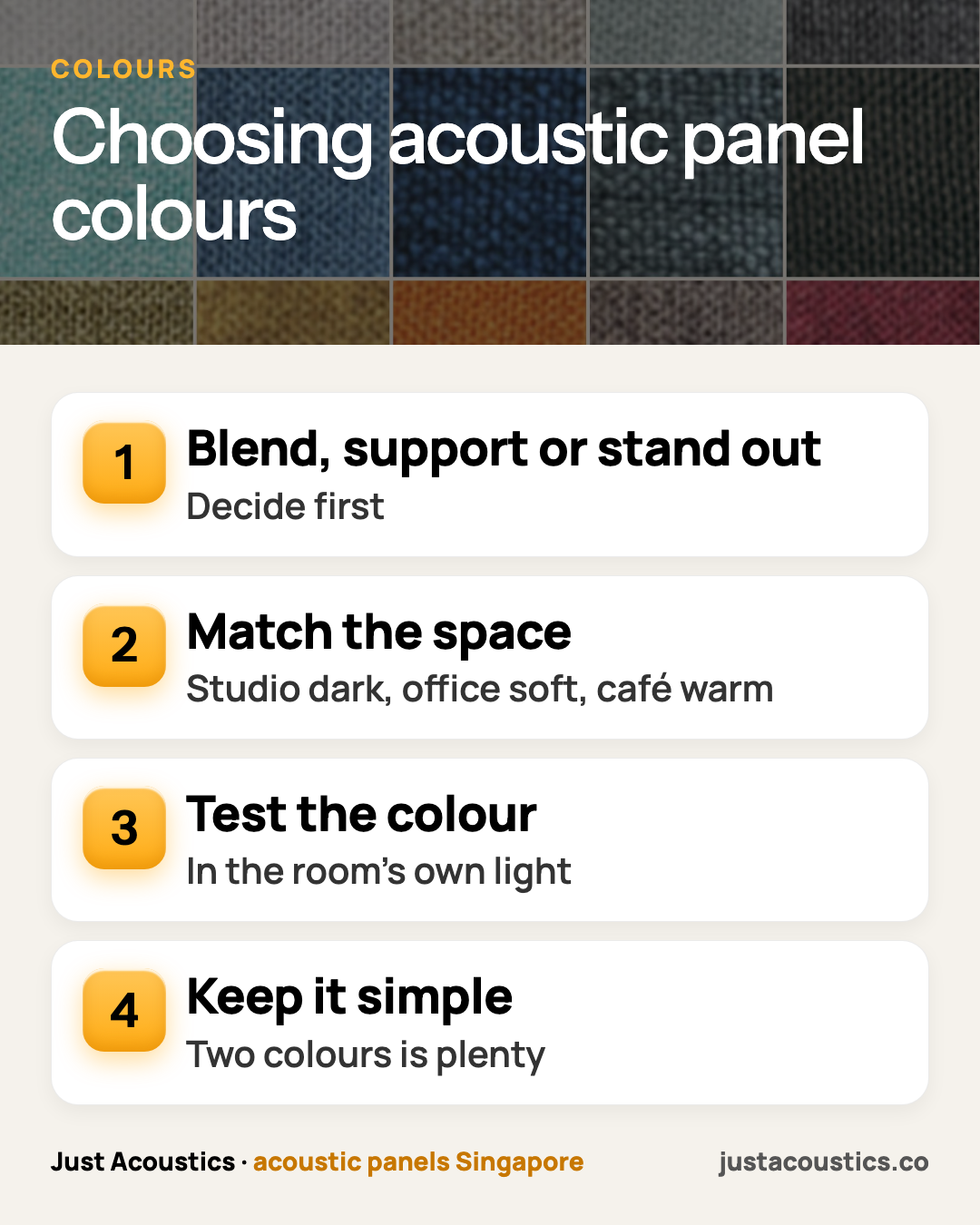
Choose acoustic panel colours by matching the room style first, then the brand or feature wall second. For most offices, studios, and cafes, one well-chosen neutral colour looks cleaner than too many mixed colours.
Quick take
Colour decisions can delay projects because fabric swatches look different under different lighting. A 3D mockup or physical sample can help. For most buyers, the hard part is not knowing the product name. It is knowing what information matters before asking for a quote.
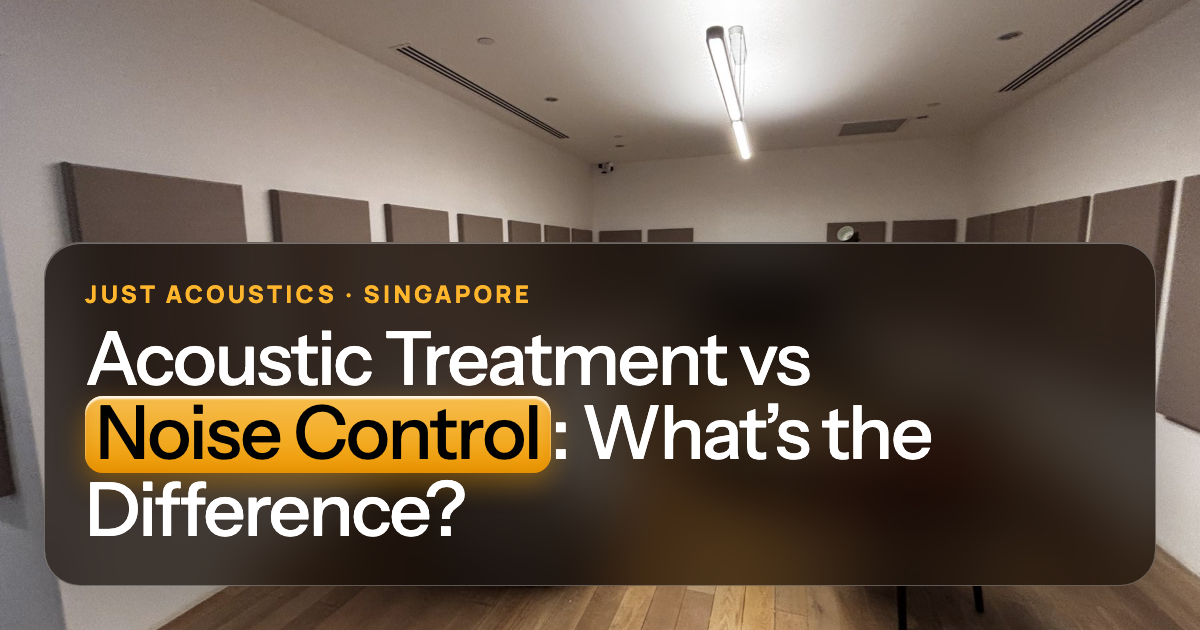
The key is to separate acoustic treatment from full soundproofing. Acoustic treatment improves how sound behaves inside the room. Soundproofing is construction work that blocks sound from entering or leaving. Many clients ask for soundproofing, but what they actually need first is echo control and clearer speech.
Why this happens
Sound keeps bouncing when there are too many hard surfaces and not enough absorption. In Singapore spaces, this often means glass walls, tiled floors, concrete ceilings, hard tables, and compact rooms with little soft furnishing.
What usually matters
- Offices usually benefit from calm neutral tones.
- Studios can handle darker colours if the room mood supports it.
- Cafes often suit warm neutrals that blend with timber, stone, or plaster.
When this approach works well
- This approach works best when the main issue is echo, speech clarity, harshness, or reflected sound inside the room.
- It works better when there is enough usable wall or ceiling area for proper panel placement.
- It is also a good fit when the client wants a clean, reversible, non-renovation-heavy improvement.
When to be careful
- It is not the right fix if the main problem is heavy sound transfer through weak walls, open gaps, or doors with no seals.
- It is also not ideal to guess the layout from one close-up photo because blocked wall space can change the recommendation.
- For custom orders, lead time, minimum quantity, and installation scope should be confirmed before management approval.
A realistic Singapore example
A common example is a client who sends a few photos first, then asks whether a site visit, floor plan, or exact measurement is needed before getting a price.
In that kind of situation, the best answer is rarely "put panels everywhere". The better answer is to find the biggest reflective surfaces, avoid blocking screens or services, and choose a layout that the client can actually approve.
If you are still comparing options, start with theacoustic panels Singapore guide, then narrow down the panel type and installation scope.
Practical recommendation
Pick the safest colour family first, then test whether you want the panels to disappear or become a design feature.
If budget is a concern, start with the highest-impact surfaces first. A smaller but well-placed treatment plan is usually better than buying a random number of panels and hoping for the best.
How to get a useful quote
Before asking for a quote, prepare these details. It saves back-and-forth and makes the first estimate much more accurate.
- Main issue: describe the problem in plain words, such as echo, sound leakage, harsh piano sound, noisy dining, installation method, or quote approval.
- Room details: width, length, ceiling height, and clear photos of every wall.
- Constraints: glass, doors, screens, AC units, sprinklers, landlord rules, or building access.
- Decision point: whether you need a rough estimate, a site visit, or a full 3D proposal.
What we would check before confirming
We would look at the available wall or ceiling area, check whether the suggested panel count fits the room, and confirm if the installation method suits the site. For commercial spaces, access timing, loading bay rules, security registration, and work-at-height requirements can also affect the plan.
If you want help, send us the room details on WhatsApp and we will tell you the cleanest next step before you commit to anything.