.svg?w=384)
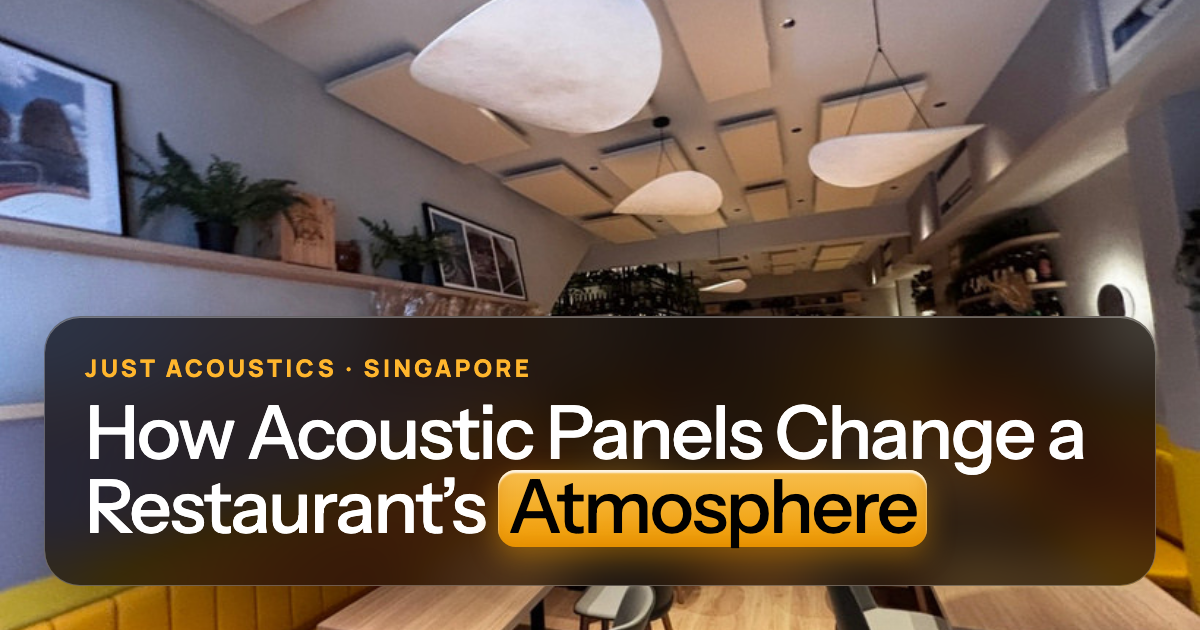
Quick answer: Acoustic panels change a restaurant's atmosphere by removing the harsh roar, not the buzz. Guests can talk at a normal volume, music sounds cleaner and staff hear orders, while the room still feels lively. Done with the right coverage (not every surface), the space feels energetic but comfortable, and panels can match or become part of the design.
Key takeaways
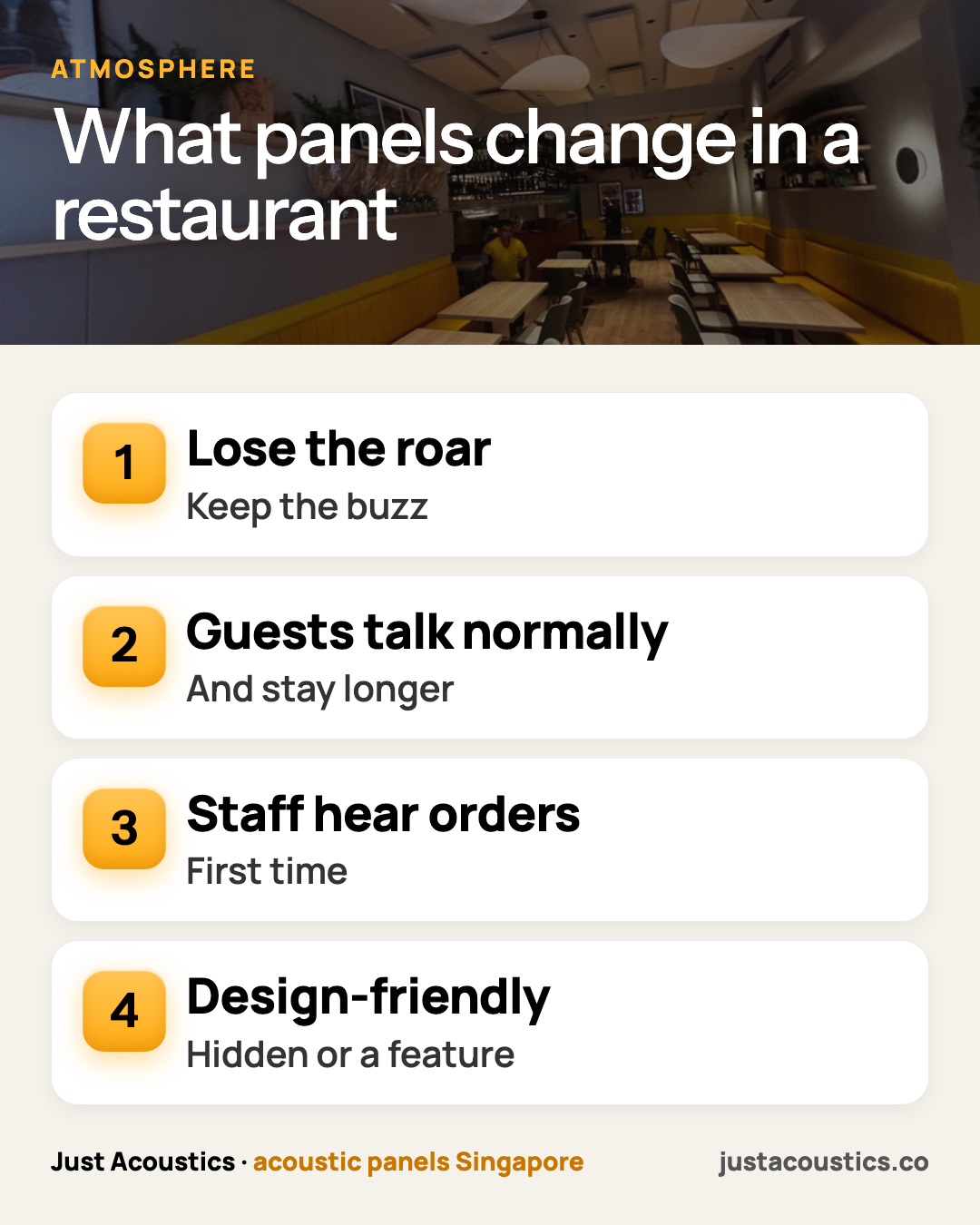
- Treatment removes the roar, not the buzz.
- The right amount matters: too little does nothing, too much feels flat.
- Panels can disappear into the design or become a feature.
Will panels make my restaurant feel dead?
Only if you over-treat. Most dining rooms sound best at around 25–35% of hard surfaces treated, enough to stop the roar, not enough to remove the energy. You keep the sound of a busy room; you lose the strain.
What changes for guests?
- They talk at a normal volume.
- They hear their own table, not the next one.
- Music becomes background again.
- There are fewer reasons for "too noisy" complaints.
Not sure what your room needs? Send us a photo on WhatsApp or request a free quote. We'll tell you how many panels, where they go and the price. See our restaurant acoustic panels and recent projects.
What changes for staff?
Orders are heard the first time and service is less shouty. Open kitchens and bars benefit too. A calmer room can make speech easier to follow for staff as well as guests.
What about the look?
Clouds and baffles can follow the lighting layout; wall panels can be colour-matched or used as a feature in one of 39 colours or a custom print. Keep fabric away from the grease, steam and flames of the kitchen line. Panels can disappear or become part of the design. See choosing panel colours.
Getting the balance right
We plan coverage room by room: more over the busiest tables and the bar, less near the entrance where some energy is welcome. Too few panels does little, and too many can make the room feel flat. A 10 × 6 m restaurant usually needs 28–38 panels. See acoustic treatment for restaurants.
Bars, open kitchens and private rooms
Bars and open kitchens add clatter, glass and shouting: treat the ceiling above them. Private dining rooms are small and hard; a few wall panels make conversation much easier. Patios and semi-outdoor areas need products and placement suited to the conditions.
What we see on real jobs
Panels don't have to make a dining room feel like an office. At Acqua E Farina on Keong Saik Road, we made custom ceiling clouds plus wall panels, about 20+ panels in all, and guests can now talk without shouting.
Get a straight answer for your room
WhatsApp us (+65 8930 1905) a photo of your dining room, ideally taken during service, and tell us when it gets loudest. We'll come back with a ceiling-and-wall plan and a price. Ask us about installing outside opening hours.
WhatsApp us a photo · Request a free quote · See prices
Related reading