.svg?w=384)
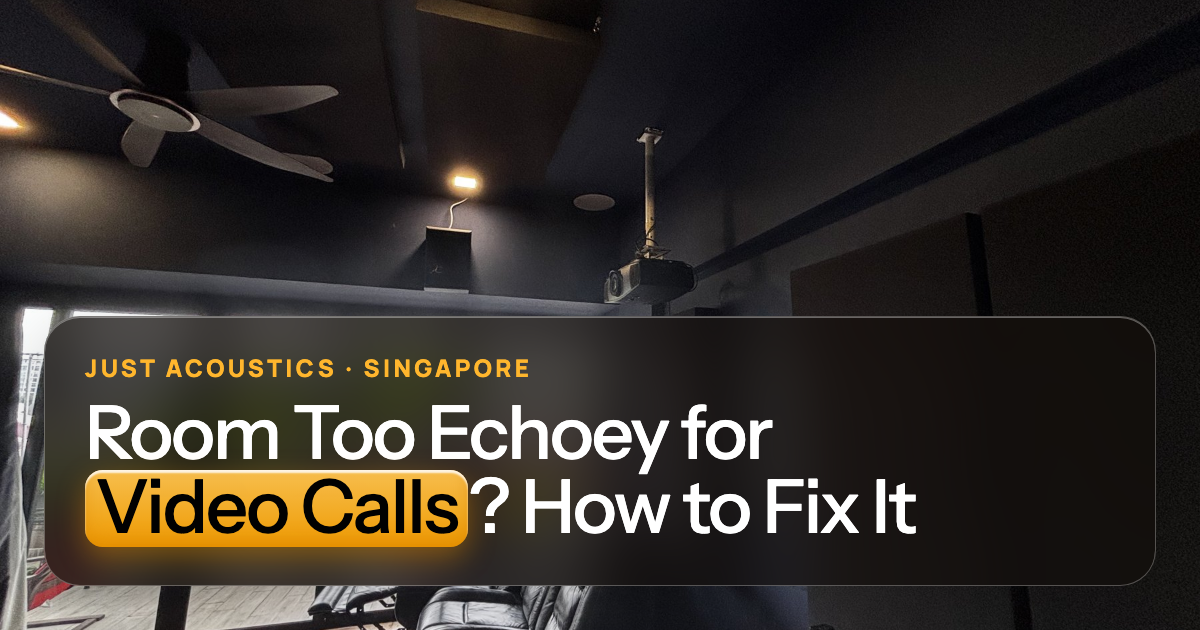
Quick answer: If you sound hollow or echoey on video calls, your microphone is picking up sound bouncing off the walls around you. Put acoustic panels on the wall behind your screen and the wall behind you first, then the side walls at head height. A small room usually needs 4–8 panels. A better microphone helps, but it can't remove room echo.
Key takeaways
- The two walls that matter most: behind your screen and behind you.
- 4–8 panels fixes most home offices and small call rooms.
- A headset or close mic helps; treating the room fixes it for everyone in it.
Why do I sound echoey on calls?
Your voice hits the wall in front of you, bounces back, and reaches the microphone a fraction of a second after your direct voice. Hard walls, tiled floors and empty rooms make it worse. Laptop microphones are especially sensitive to this because they sit further from your mouth.
Where should acoustic panels go for calls?
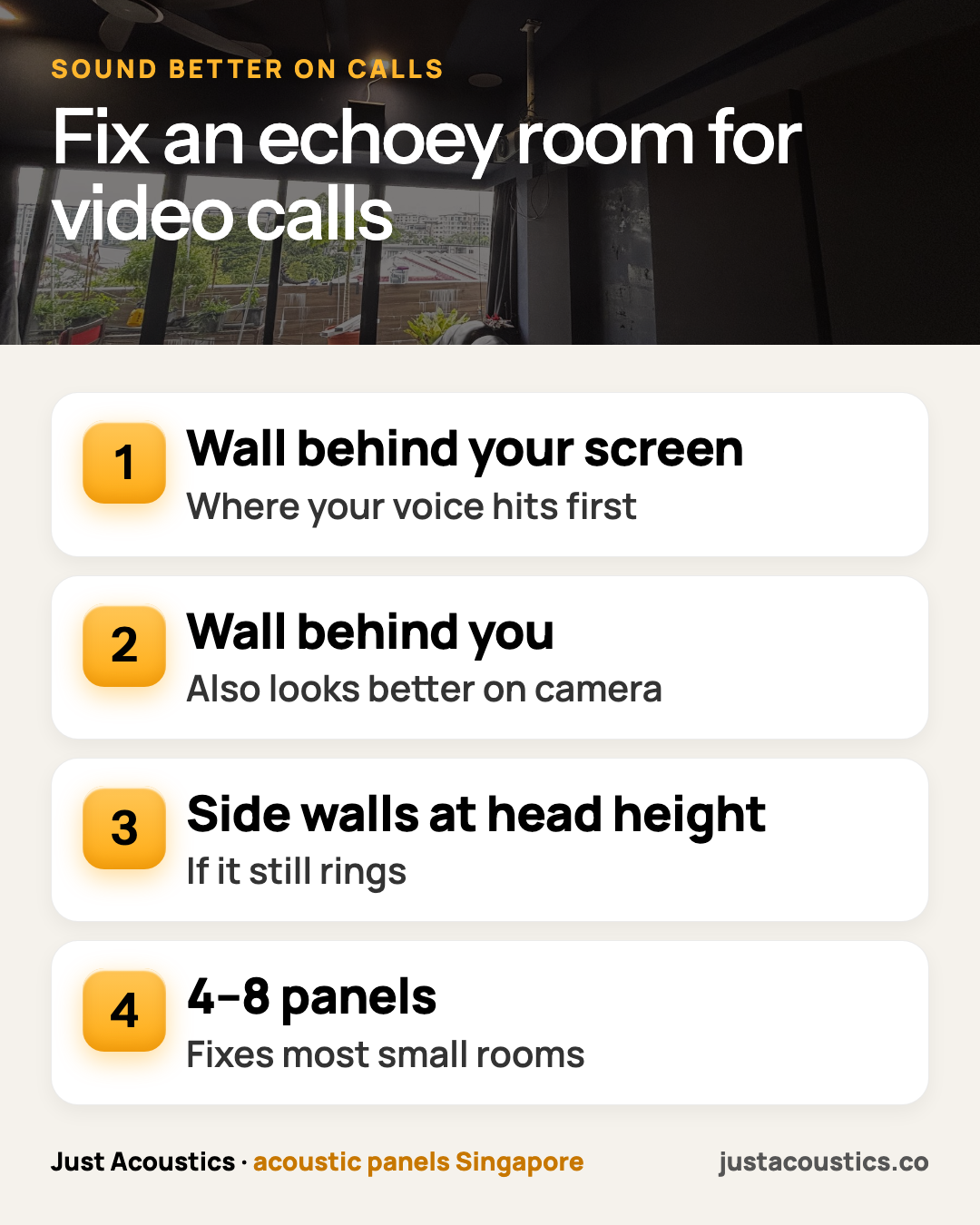
- The wall behind your screen, where your voice hits first.
- The wall behind you, which also improves what people see on camera.
- Side walls at head height if the room still rings.
- The ceiling in larger rooms.
For a full meeting room, see how many panels a meeting room needs.
Not sure what your room needs? Send us a photo on WhatsApp or request a free quote. We'll tell you how many panels, where they go and the price. See our acoustic panels Singapore and recent projects.
How many panels do I need?
A home office or call room of 9–12 m² usually needs 4–8 standard panels. A meeting room used for hybrid calls usually needs 6–10, sometimes with a ceiling cloud. At S$185 per panel installed, 4–8 panels is about S$740–S$1,480, and the exact count is confirmed from photos.
What else helps?
- A headset or a microphone close to your mouth.
- A rug on a tiled floor.
- Curtains instead of bare glass.
- Turning off "enhance" filters that can make echo sound worse.
Meeting rooms with a conference system
Conference speakers and ceiling microphones pick up the whole room, so room echo matters even more. Treat the walls around the table and the wall facing the camera. In bigger rooms, add a ceiling cloud above the table too. See acoustic treatment for offices.
How to test before and after
Record yourself for 30 seconds on a call app (most let you record a test). Listen with headphones. Then add panels and record again from the same seat. The "hollow" sound should be gone, and your voice should sound closer, as if you moved nearer the microphone.
What we see on real jobs
A hollow sound on calls is usually the room, not the microphone. A new microphone still picks up the echo bouncing around it. Two walls of panels, behind and in front of the desk, usually does more than a new mic.
Get a straight answer for your room
Send us a photo or a short video of the room on WhatsApp (+65 8930 1905). We'll reply with whether panels are the right fix, how many you need, where they go and the price. If it's really a soundproofing problem, we'll tell you.
WhatsApp us a photo · Request a free quote · See prices
Related reading