.svg?w=384)
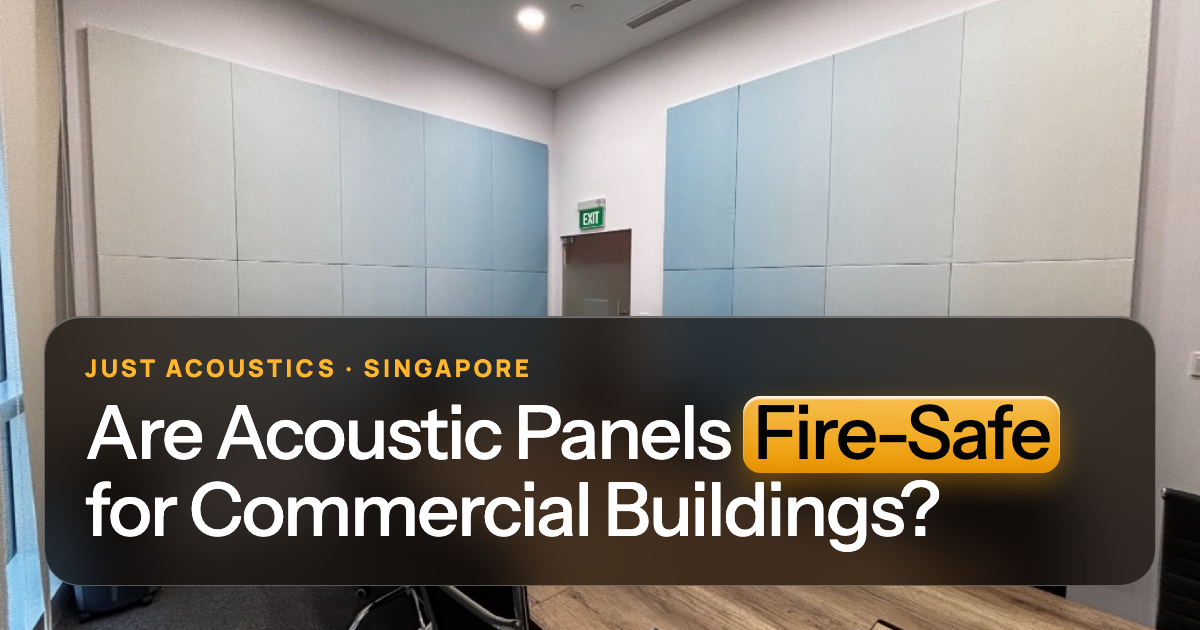
Quick answer: Commercial buildings in Singapore may need fire safety information for acoustic panels before approving delivery or installation. Ask your supplier for the product specification and the relevant fire test information for the exact panel and fabric you are buying, and give it to building management early. Our Flexi™ panels are fire safe and formaldehyde safe. Where fire papers or QP/PE sign-off are needed, we coordinate with the owner's side and third-party consultants.
Key takeaways
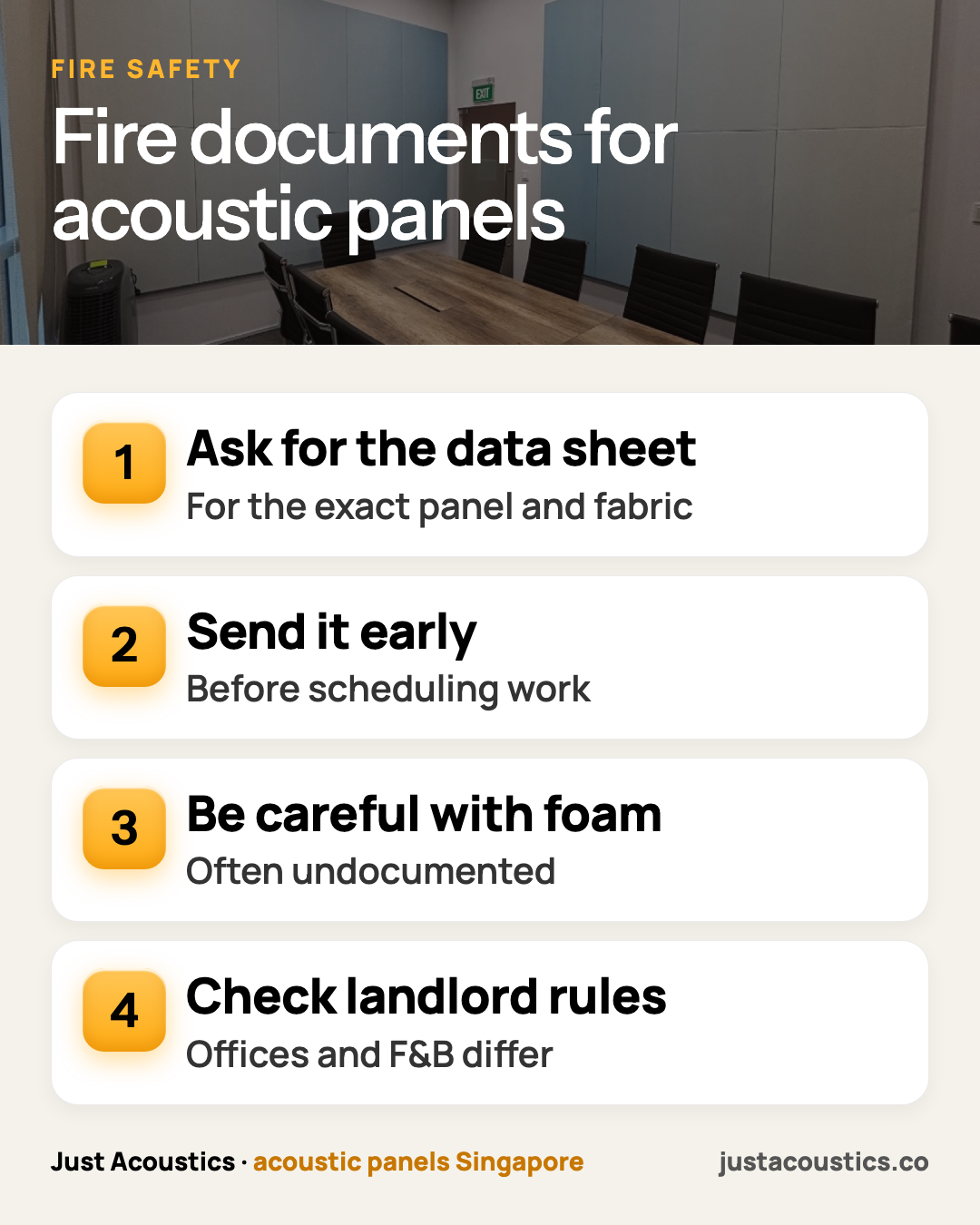
- Ask for fire information for the exact panel and fabric.
- Provide it to building management before scheduling work.
- Thin foam often lacks proper paperwork.
Why does fire safety come up?
Malls, offices and F&B units are regulated spaces, and management wants assurance that interior finishes meet requirements. Fabric panels cover large areas of wall and ceiling. That is why they are checked before work is approved.
What should I ask my supplier?
For the specification of the core and fabric, any fire test reports, and whether the documents match the exact product being installed. A document for a different product will not help. Check the panel name and fabric on every page.
Not sure what your room needs? Send us a photo on WhatsApp or request a free quote. We'll tell you how many panels, where they go and the price. See our office acoustic panels and recent projects.
What is different about foam?
Many cheap foams are flammable and lack documents. Building management may reject them for that reason alone. Fabric panels with a proper data sheet are easier to approve. See foam vs panels.
What if the building rejects the product?
Better to know before ordering. Send management the data sheet early and ask whether they want anything else. Panels are made to order in about 4–6 weeks, so a late rejection can cost over a month.
What we see on real jobs
The documents are rarely a problem if they are requested early. They become one when they are asked for the day before installation.
Get a straight answer for your room
Send a photo of the meeting room or floor on WhatsApp (+65 8930 1905), with the rough size. We'll tell you how many panels, where they go and the price, and we can prepare documents for your building management.
WhatsApp us a photo · Request a free quote · See prices
Related reading