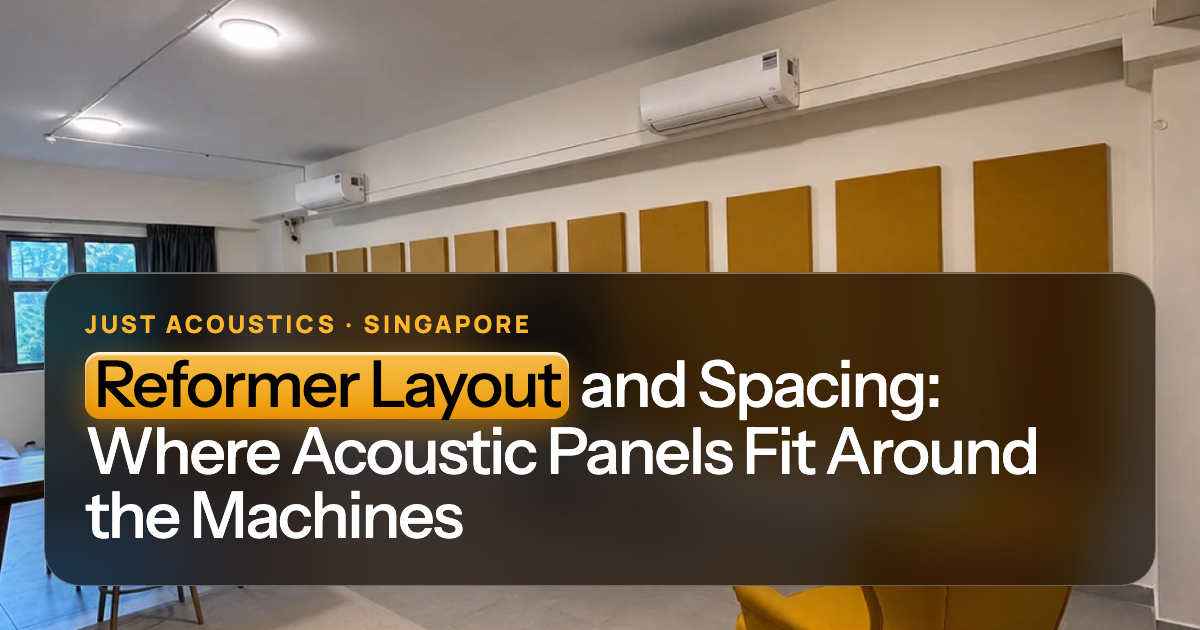
Quick answer: In a reformer studio, machines usually run in rows with the instructor at the front or walking between. Panels work best on the walls at the ends of the rows and opposite the instructor, above the height of the machines and towers. Plan layout and panels together so towers, mirrors and panels do not clash.
Key takeaways
- Plan reformer rows and panels together.
- Panels go above machine and tower height.
- Treat the wall opposite the instructor.
How does layout affect sound?
Reformers in tight rows near bare walls send carriage and spring noise straight back. The instructor at the front may struggle to reach the back row. Long, narrow rooms bounce sound between the long walls. Layout and treatment go hand in hand.
Where do panels go around reformers?
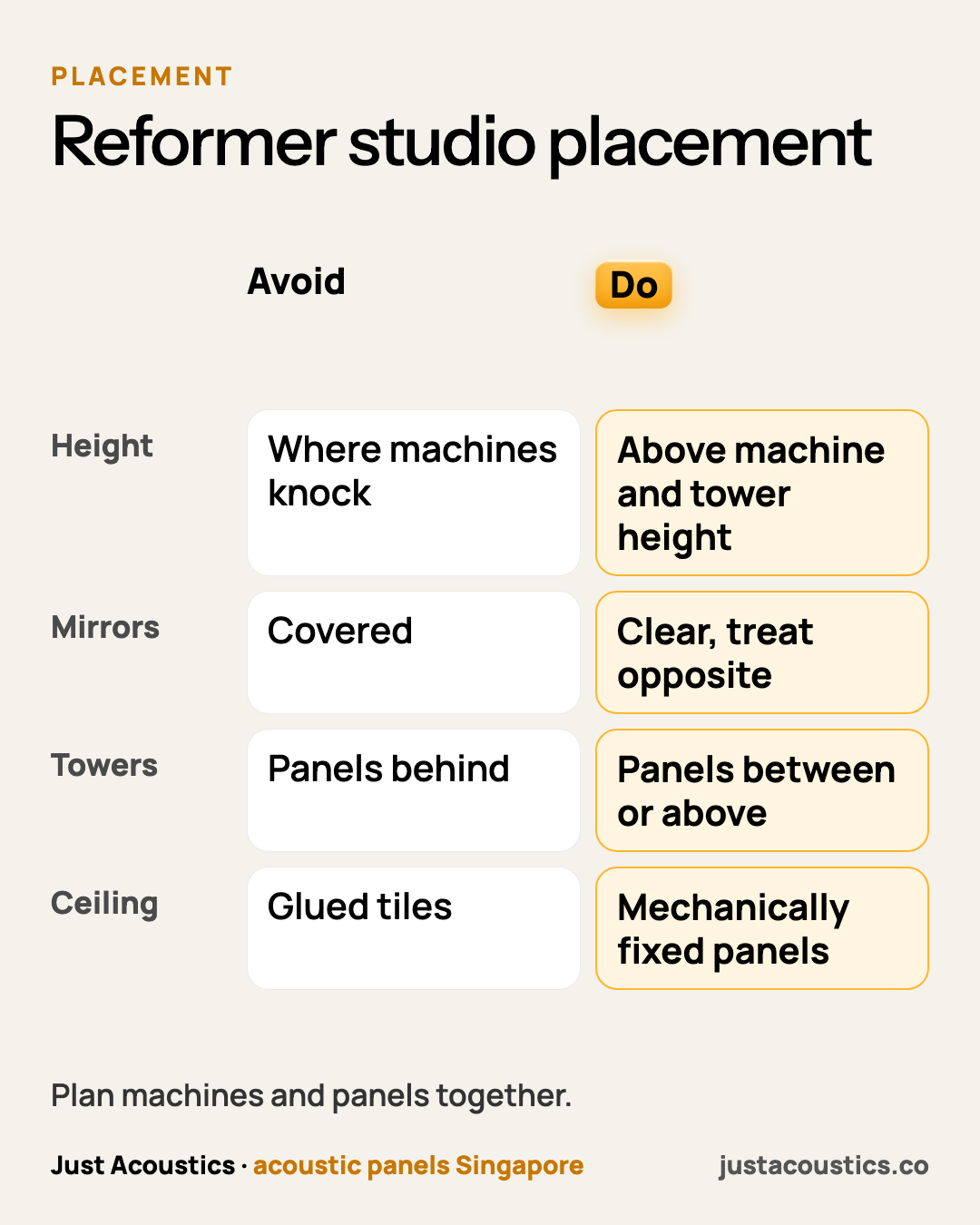
On the long walls beside the rows, at standing height and above, so machines do not knock them. On the wall opposite the instructor. In tall rooms, on the ceiling over the rows, always fixed mechanically. See where to place panels first.
Not sure what your room needs? Send us a photo on WhatsApp or request a free quote. We'll tell you how many panels, where they go and the price. See our gym and studio acoustic panels and recent projects.
What about towers and wall units?
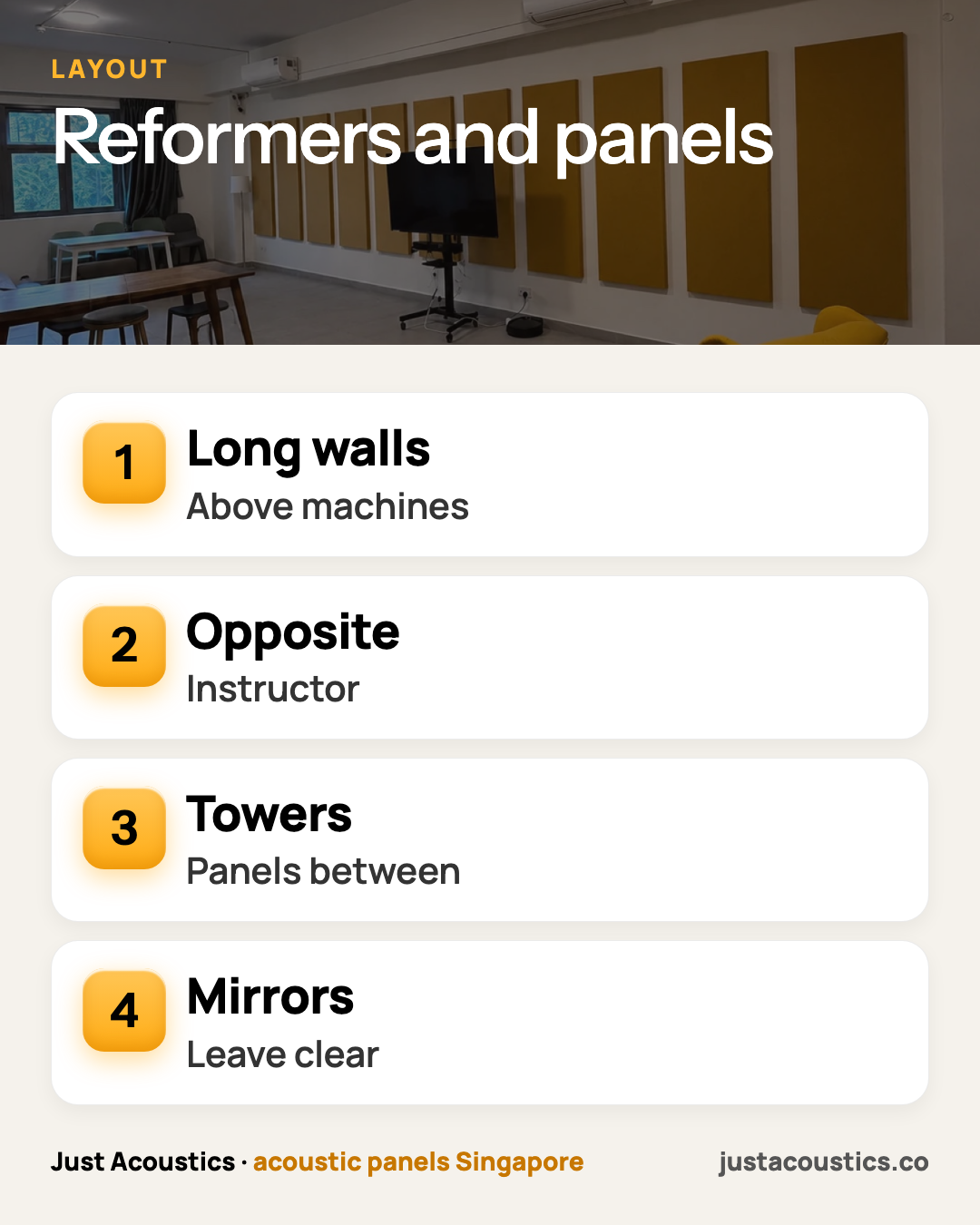
Towers and wall-mounted springboards take wall space. Place panels between or above them. Leave clear zones where straps and bars swing. Mark these on the floor plan before install. See what measurements you need.
Do mirrors clash with panels?
Mirrors are hard and reflective, so treat the walls around them and the wall opposite. Leave the mirror wall mostly clear for form checks. Do not cover mirrors with panels.
Will panels stop carriage thuds downstairs?
No. Carriages hitting the stopper send vibration through the floor. That needs mats or flooring under machines. Panels only reduce echo in the room. See acoustic treatment vs soundproofing.
How many panels for a reformer studio?
A typical studio needs 15 to 25 panels, about S$2,775 to S$4,625 at S$185 each installed. The exact count depends on room size and layout, confirmed from photos. Standard fixings are included; scaffold for tall rooms is quoted separately. See acoustic panel prices.
Can I rearrange machines later?
Yes, panels on walls usually still work if rows change. Ceiling panels are the most flexible. Keep the wall opposite the instructor treated, wherever the instructor ends up standing.
What thickness?
50 mm panels (NRC (a score from 0 to 1 for how much sound a panel soaks up) 1.00) handle spring clank and music well. 25 mm panels (NRC 0.80) suit quieter rooms with little music. Both come in the same three sizes, so they can sit side by side. See are thicker panels better.
What we see on real jobs
Planning reformers first and panels last often leaves awkward gaps. Doing both together gives a cleaner result.
Get a straight answer for your room
Send a photo or short video of your studio or gym floor on WhatsApp (+65 8930 1905), ideally during a class. We'll suggest where panels go, keep them clear of equipment and mirrors, and install outside class times.
WhatsApp us a photo · Request a free quote · See prices
Related reading
- Gym acoustic treatment
- Gym and studio acoustic panels
- Where to place acoustic panels first
- What measurements you need
- Acoustic panel prices in Singapore
- Prices and installation
- Our projects
- Flexi™ acoustic panels (39 colours)
- Get a free quote
- Vinyasa and Flow Yoga Studios: Music and Cues That Both Come Through
- Yin and Restorative Yoga Studios: Quiet Without Feeling Dead
- Fitness Studio Fit-Out: When to Add Acoustic Panels (Timeline)