Quick answer: Fixed properly, acoustic panels leave only small screw holes, or no holes at all with a no-drill system. The real risks are peeling paint when adhesive comes off, and drilling into hidden pipes or wires. Choose the right fixing for your wall, test paint first, and take panels down slowly.
Key takeaways
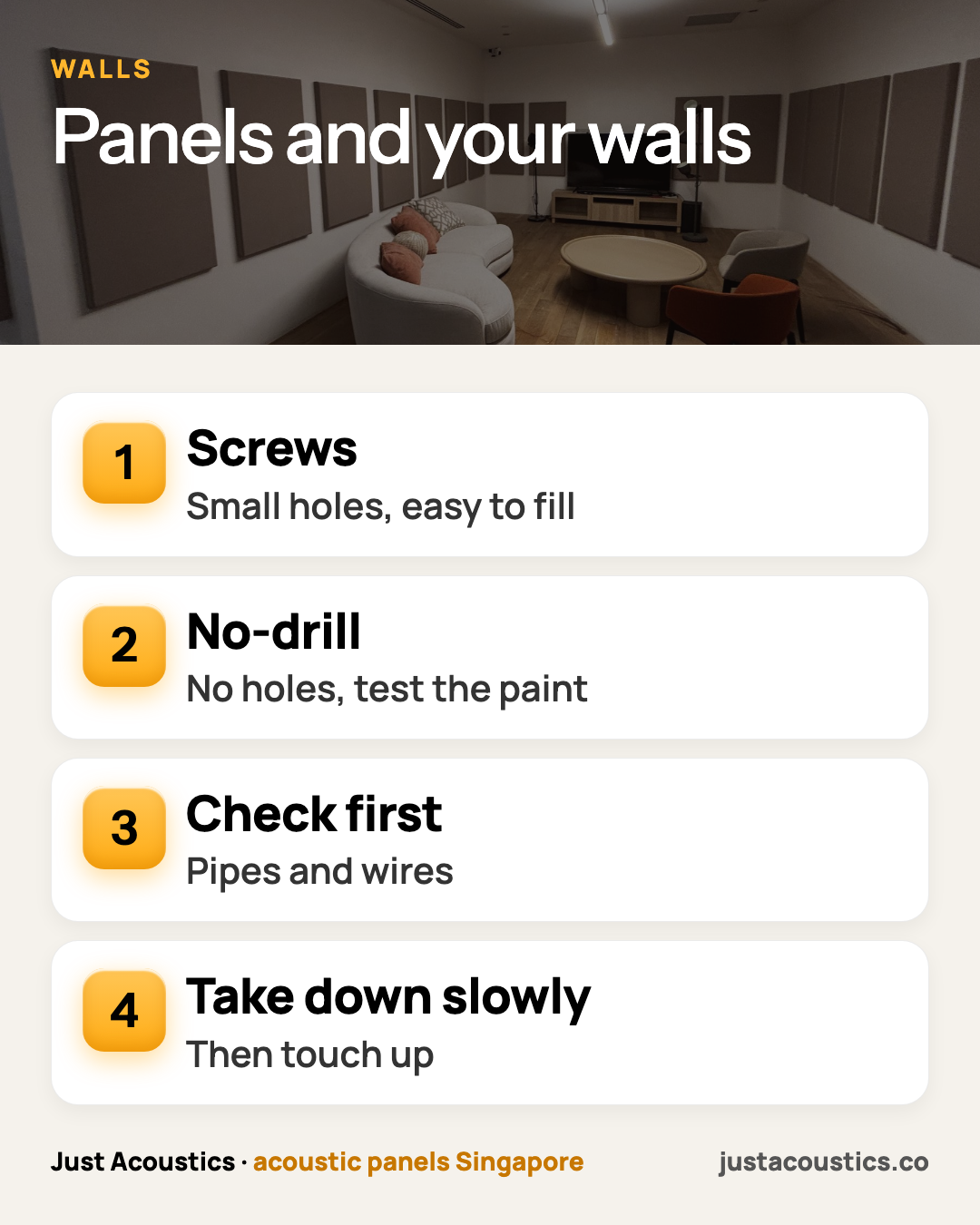
- Screws leave small holes that are easy to patch.
- No-drill fixings leave no holes but can lift weak paint.
- Never drill without checking for pipes and wires.
How panels are fixed
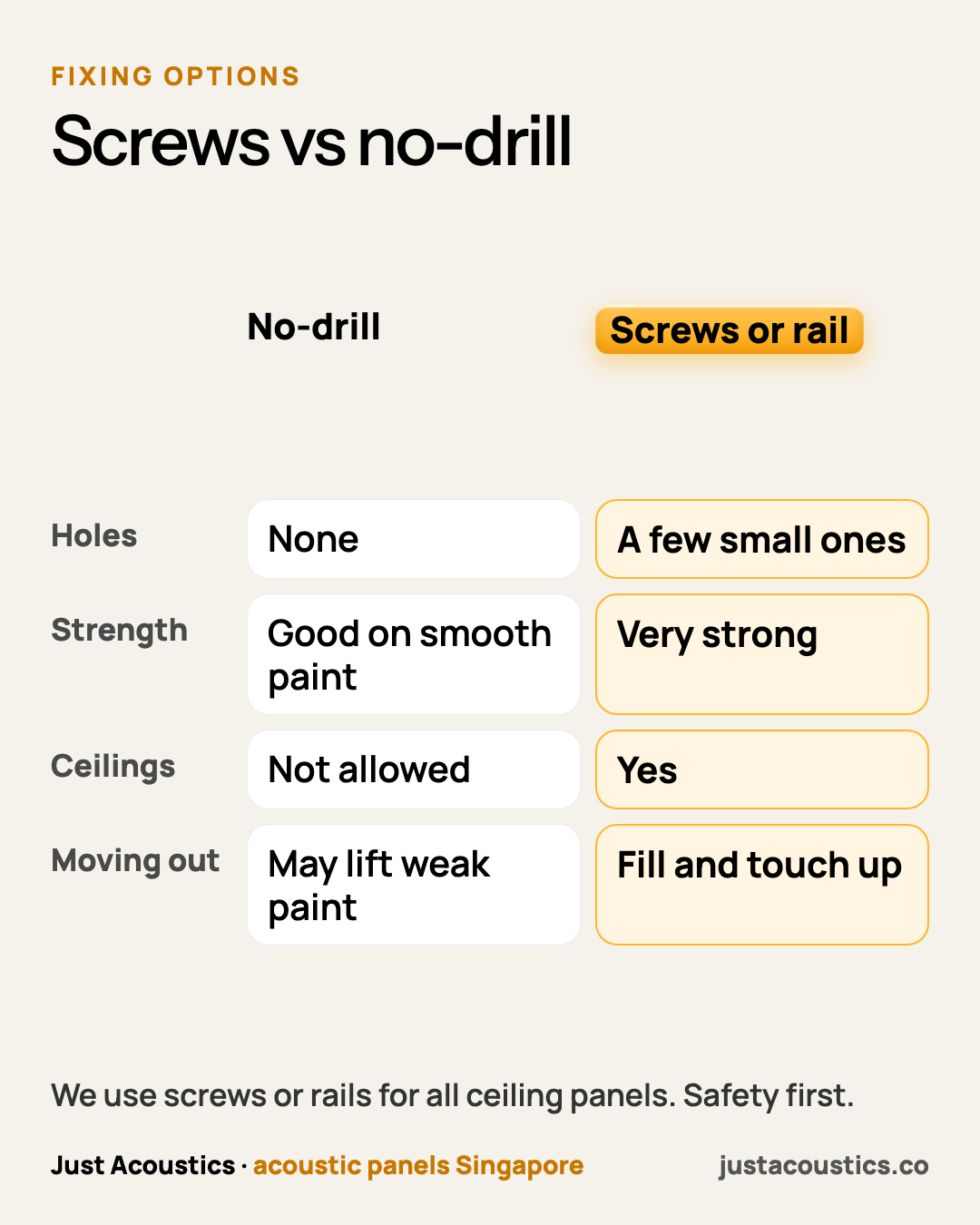
There are two main ways. Mechanical fixing uses small screws, clips or a rail. It is very strong and is what we use for ceilings and most commercial jobs. No-drill fixing uses strong adhesive pads or strips on smooth painted walls. It suits rentals and homes where you want no holes.
What screws leave behind
A few small holes per panel, hidden behind the panel while it is up. When you move out, fill them with filler and touch up the paint. It is the same as taking down a shelf.
Not sure what your room needs? Send us a photo on WhatsApp or request a free quote. We'll tell you how many panels, where they go and the price. See our acoustic panels for homes and recent projects.
What adhesive can do
Good adhesive holds well on smooth, sound paint. The risk is when you take it off: if the paint is old or poorly stuck to the wall, it can lift with the pad. That is why we test on one spot first. See acoustic panels without drilling.
HDB flats
HDB internal walls are mostly concrete or blockwork, which hold screws well. Many owners drill to mount shelves and TVs. Stay clear of areas where pipes and wires may run, and check HDB's renovation guidelines for your flat. See acoustic treatment for HDB flats.
Condos
Many condos have rules about drilling hours and noise. Some also limit work on shared walls. Check with your management office (MCST) before the install day. See acoustic panels for condos.
Rentals
Read your tenancy agreement or ask your landlord. Many tenants use no-drill panels and take them along when they move. We can take panels down at the end of your lease and re-fit them at your next home.
How to take panels down safely
Unscrew mechanical fixings, then fill the holes. For adhesive, pull slowly and follow the pad maker's release method, so the paint comes off as little as possible. Budget for a small paint touch-up either way.
What we check on install day
We look for wires and pipes and tap the wall to find out what it is made of. We check the paint is sound. Then we agree the fixing method with you before we drill or stick anything.
If you are moving out
Take panels down a day or two before the handover. Fill screw holes, sand lightly and touch up the paint. With adhesive pads, warm them gently and peel slowly. Or we can take the panels down for you and re-fit them at your next home.
What we see on real jobs
Before we fix anything, we look at the wall, tap it, and ask what is behind it. In rentals we usually suggest no-drill fixings and test one panel first.
Get a straight answer for your room
WhatsApp a photo of the room (+65 8930 1905) and tell us what you use it for: calls, TV, music or mixing. We'll suggest a layout, a colour and a price, including no-drill options where your walls allow.
WhatsApp us a photo · Request a free quote · See prices
Related reading