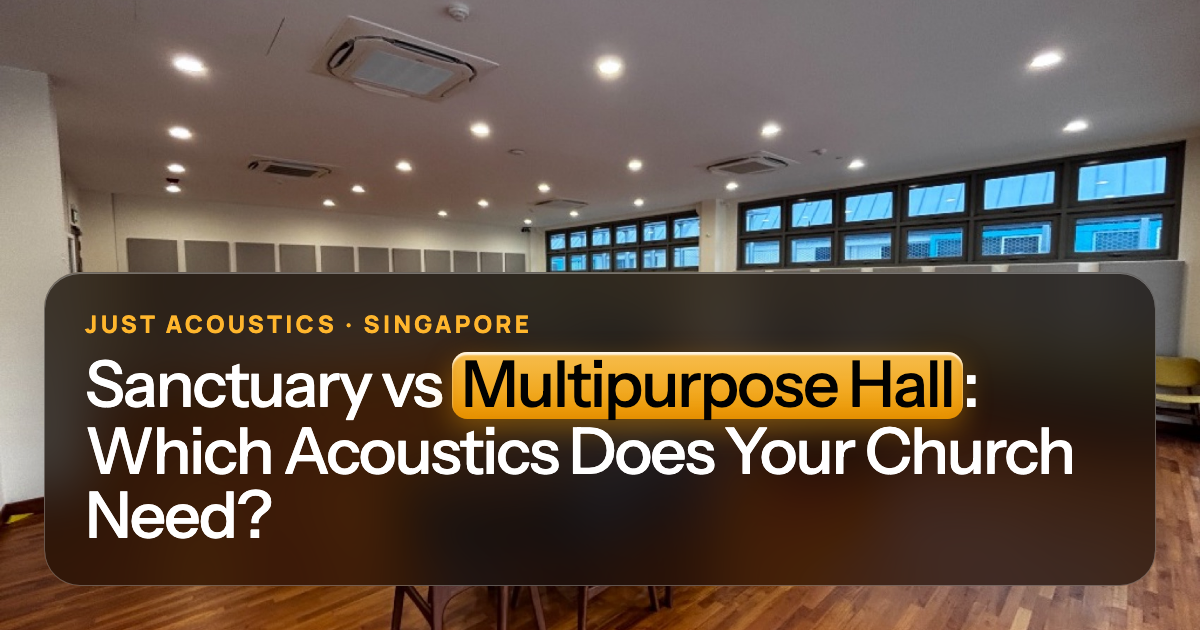
Quick answer: A dedicated sanctuary can be tuned for one main use, such as a choir and organ or a worship band with preaching. A multipurpose hall must handle worship on Sunday, meals, games and talks during the week, so it needs a balanced amount of absorption (how much sound gets soaked up) that suits speech first. In both, panels go on the rear wall and upper side walls. The multipurpose hall also needs tough placement, away from balls, tables and trolleys.
Key takeaways
- A sanctuary can be tuned for its main use.
- A multipurpose hall should favour clear speech.
- Place panels where chairs and balls cannot hit them.
What makes a sanctuary different?
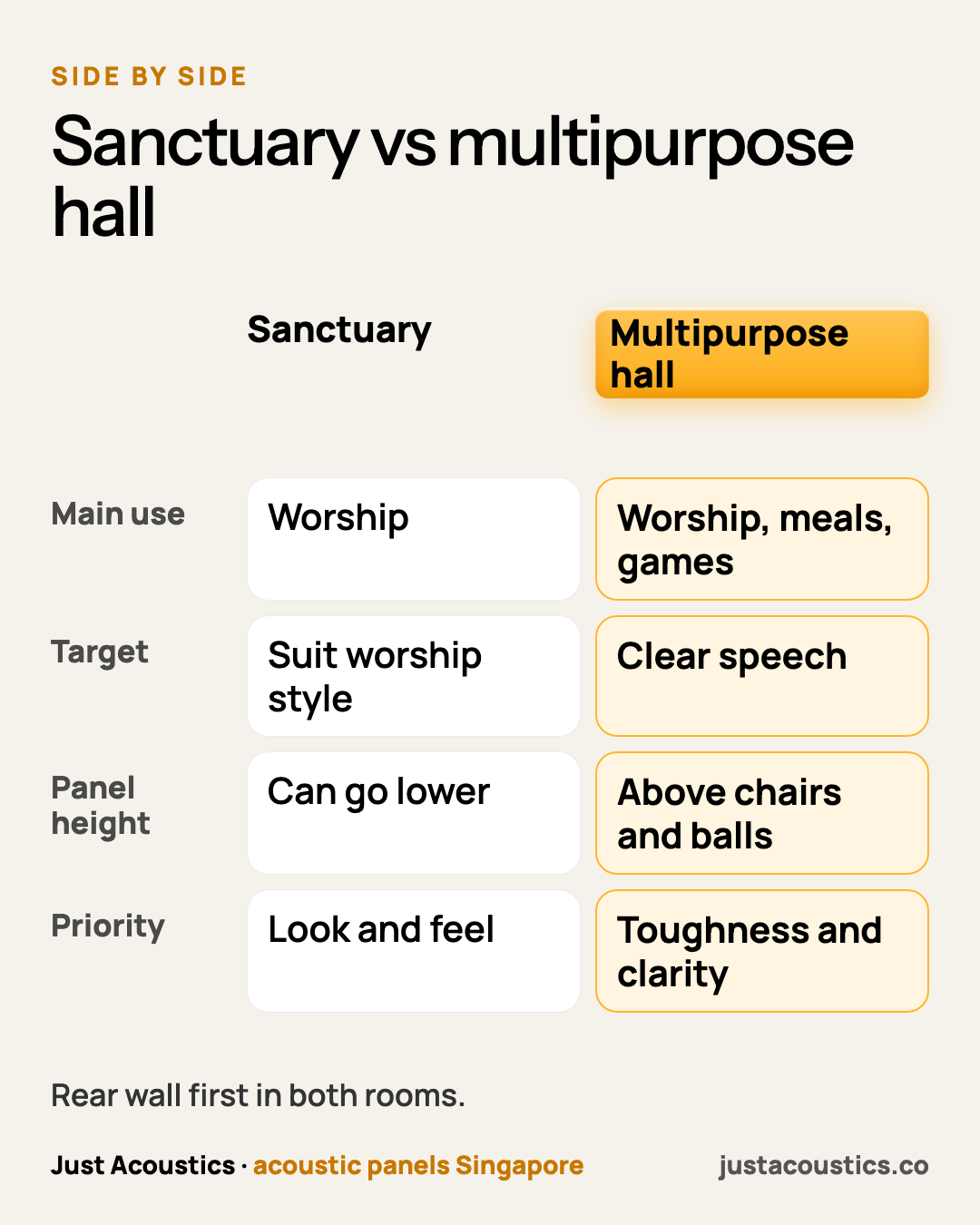
A sanctuary is used mainly for worship, so you can choose how lively it sounds. A traditional choir and organ church may want a little more reverb, while a band-led church wants a drier room. The look also matters more, so colours and layout should suit the space. See church acoustic treatment in Singapore.
What makes a multipurpose hall harder?
It must suit many uses: worship, potluck meals, youth games, seminars and weddings. Each use creates different noise, from clattering plates to shouting players. The safest target is a room that makes speech clear, because almost every use involves people talking. Music still sounds good in a room tuned for speech. See church hall echo fixes.
Not sure what your room needs? Send us a photo on WhatsApp or request a free quote. We'll tell you how many panels, where they go and the price. See our church acoustics and recent projects.
Where do panels go in each?
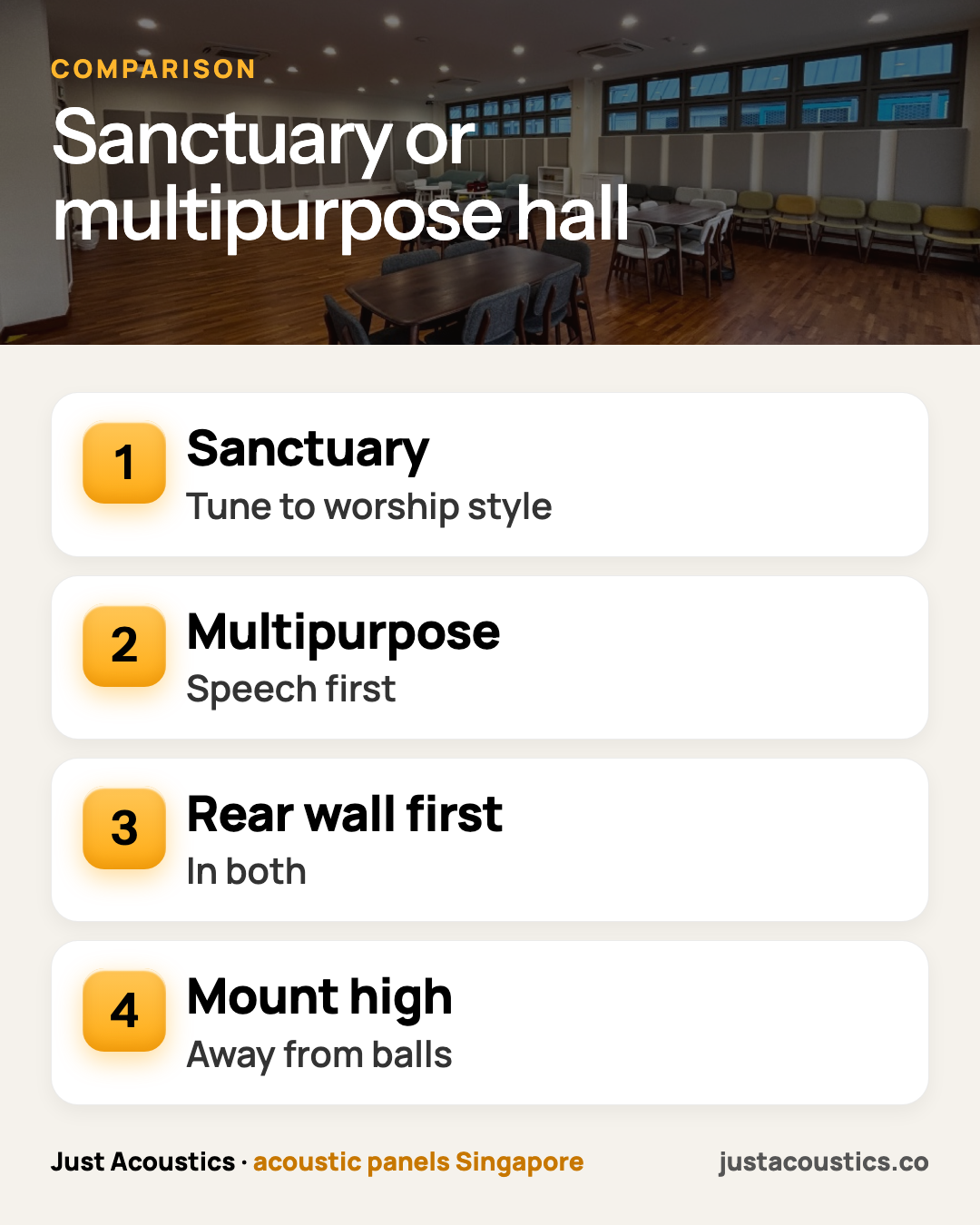
In both, the rear wall facing the stage comes first, then the upper side walls. In a sanctuary you can go lower on the walls if pews block access. In a multipurpose hall, keep panels above the height of stacked chairs, tables and flying balls. Ceiling panels help in both if the structure allows.
How many panels does each need?
A hall of about 20 × 12 m usually needs around 152 to 206 panels, roughly 20–40% of the wall area. A sanctuary with a choir may sit at the lower end; a busy multipurpose hall often needs the higher end. We confirm the count from measurements. See how many acoustic panels you need.
What does each cost?
At S$185 per panel installed, 152 to 206 panels comes to about S$28,000 to S$38,000. You can phase the work: rear wall first, then side walls the next year. Standard fixings are included; scaffold for high ceilings, night or Sunday work and custom sizes are quoted separately. See acoustic panel prices.
Should the panels be thick or thin?
For large halls, 50 mm panels (NRC (a score from 0 to 1 for how much sound a panel soaks up) 1.00) soak up more of the lower voice and music range. 25 mm panels (NRC 0.80) suit smaller rooms and tight budgets. Most worship halls do best with 50 mm on the main walls. See are thicker panels better.
Weddings and funerals
These events depend on clear speech and gentle music, so a speech-friendly hall serves them well. Vows, eulogies and readings need every word heard. A calmer room can make speech easier to follow for guests at the back.
Fellowship meals
Treated walls stop plate and chair noise building up, so people can talk without shouting. Mount panels above the height of stacked chairs and trolleys. Keep fabric away from food warmers, steam and any cooking area.
What we see on real jobs
When one hall is used for everything, aim for clear speech first, because that serves every use.
Get a straight answer for your room
Send us a short video of your hall during a service or rehearsal on WhatsApp (+65 8930 1905). We'll suggest where to start, how to phase it and what it costs, and schedule work around your services.
WhatsApp us a photo · Request a free quote · See prices
Related reading
- Church acoustic treatment in Singapore
- Church hall echo: the fix
- How many acoustic panels do I need?
- Are thicker panels better?
- Church acoustic panels
- Prices and installation
- Our projects
- Flexi™ acoustic panels (39 colours)
- Get a free quote
- Case Study: Church of Christ, Pasir Panjang: Custom Panels in One Week