Should Acoustic Treatment Be Planned Before or After Interior Design?
Acoustic treatment works best when it is planned with the interior, not squeezed in after everything else is fixed.
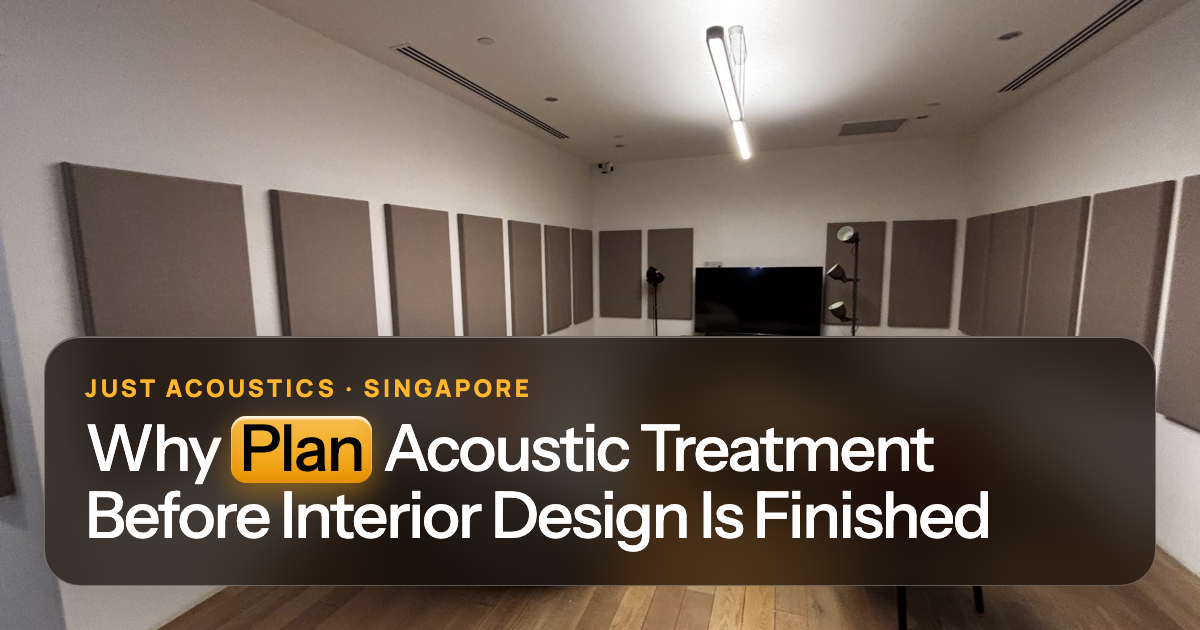
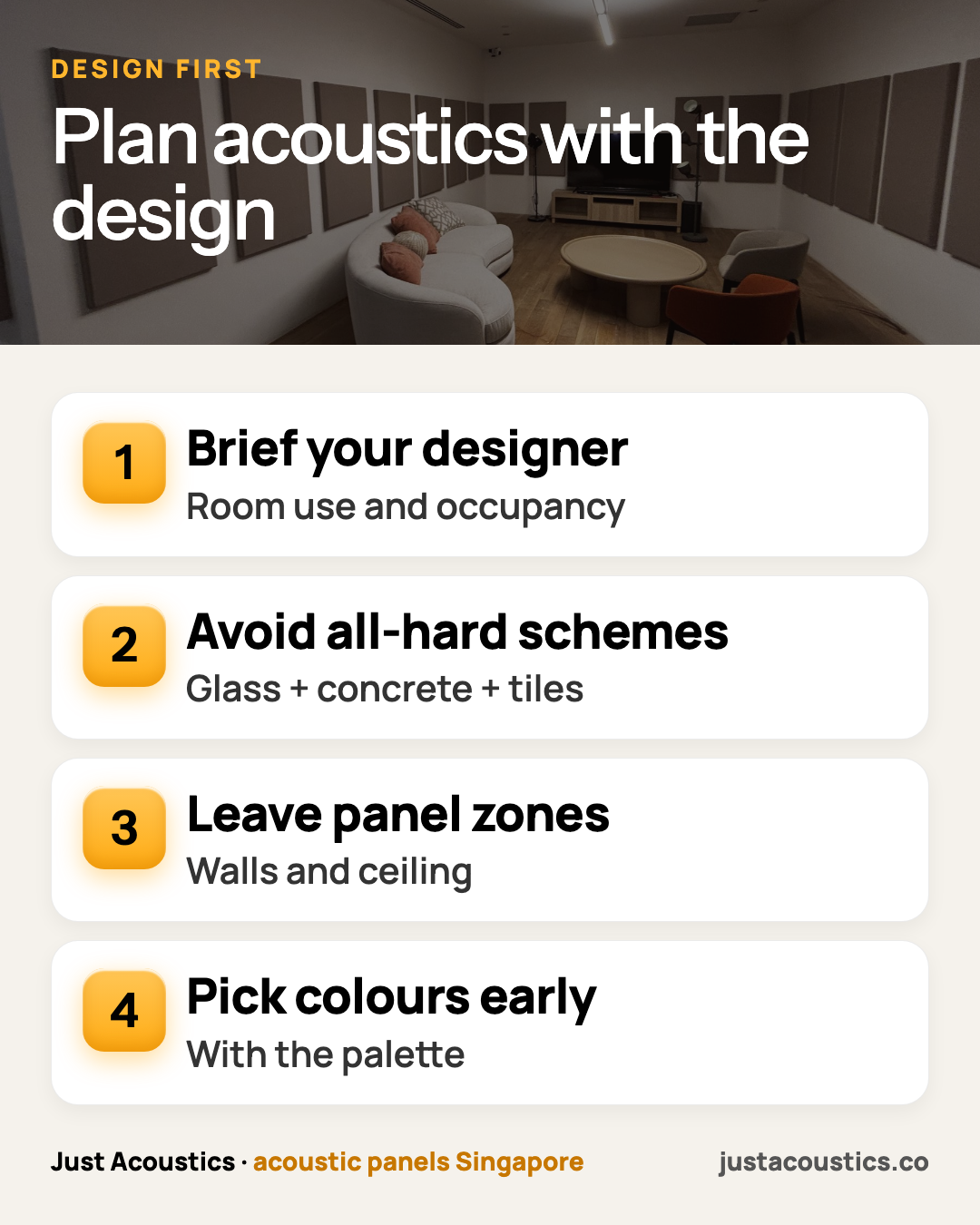
Acoustic treatment should ideally be planned before interior design is fully finalised. It does not need to lead the design, but it should influence wall space, ceiling access, finishes, and colour choices.
Quick take
When acoustics are added too late, the best surfaces may already be blocked by screens, shelves, lights, branding, or decorative finishes. For buyers, the practical goal is to understand what actually changes the quote and result before spending money.
The most useful starting point is to name the sound problem clearly. Echo, speech clarity, bass boom, neighbour noise, and room-to-room leakage do not all need the same fix.
Why this matters
- Interior finishes affect sound.
- Acoustic panels need real wall or ceiling space.
- Colour and shape decisions are easier before production.
A bad acoustic decision usually happens when the room is treated like a product purchase instead of a room problem. The panel itself matters, but the placement, coverage, thickness, and mounting method decide whether the result feels useful.
What to check first
Look at the room use, the sound source, the hard surfaces, and where people are sitting or listening. Then check the surfaces that sound is bouncing off first: glass, bare wall, ceiling, floor, table, or nearby corners.
- Who is speaking, playing, recording, or listening in the room?
- Which surfaces are closest to that activity?
- Is the issue mostly echo, harshness, boom, privacy, or outside noise?
- Are there practical limits such as screens, lights, AC units, doors, or landlord rules?
A realistic Singapore example
A restaurant ID plan with exposed ceilings can reserve ceiling panel zones early instead of trying to fit them around lights later.
If you are still comparing options, start with ouracoustic panels Singapore guidebefore choosing the final product.
Practical recommendation
Bring the acoustic discussion in once the room use and rough layout are known.
If you are working with a budget, start with the highest-impact areas first. A smaller, properly placed treatment plan is better than buying random panels and hoping the room improves.
What a good result should feel like
A good result is not always dramatic silence. Most of the time, the room should simply feel easier to use. Speech should be clearer, music should feel less messy, calls should sound less hollow, and people should not feel like they need to raise their voices.
For commercial spaces, the improvement should also make operations easier. Staff should not get as tired from noise, customers should feel more comfortable staying longer, and meeting rooms should feel more professional during calls.
How this affects budget
Budget is usually affected by the number of panels, the type of panel, whether the work is on walls or ceilings, and how difficult the site access is. High ceilings, custom colours, made-to-order panels, and building approvals can change the final scope.
The cheapest option is not always the best value if it leaves the main reflection points untreated. The better question is: what is the smallest treatment plan that solves the real issue properly?
When to be careful
If acoustics are treated as decoration only, the final room may look nice but still sound tiring.
Also be careful when a product is sold as a universal fix. Acoustic treatment works best when the panel type, quantity, mounting method, and placement match the actual room problem.
What to send before asking for a quote
- Photos of every wall and the ceiling.
- Width x length x ceiling height.
- A short note on what sounds wrong and when it happens.
- Any constraints such as glass, doors, AC units, landlord rules, renovation timing, or building access.
If you have renovation drawings, an ID render, or a floor plan, send those too. They help us spot conflicts before the quote is finalised, especially for ceiling services, glass walls, built-in carpentry, and lighting positions.
Next step
Send the room details first. From there, we can usually tell whether you need a rough estimate, a site visit, a 3D proposal, or a different type of solution entirely.
When you are ready, use thecontact pageto send photos, dimensions, and the main sound issue.