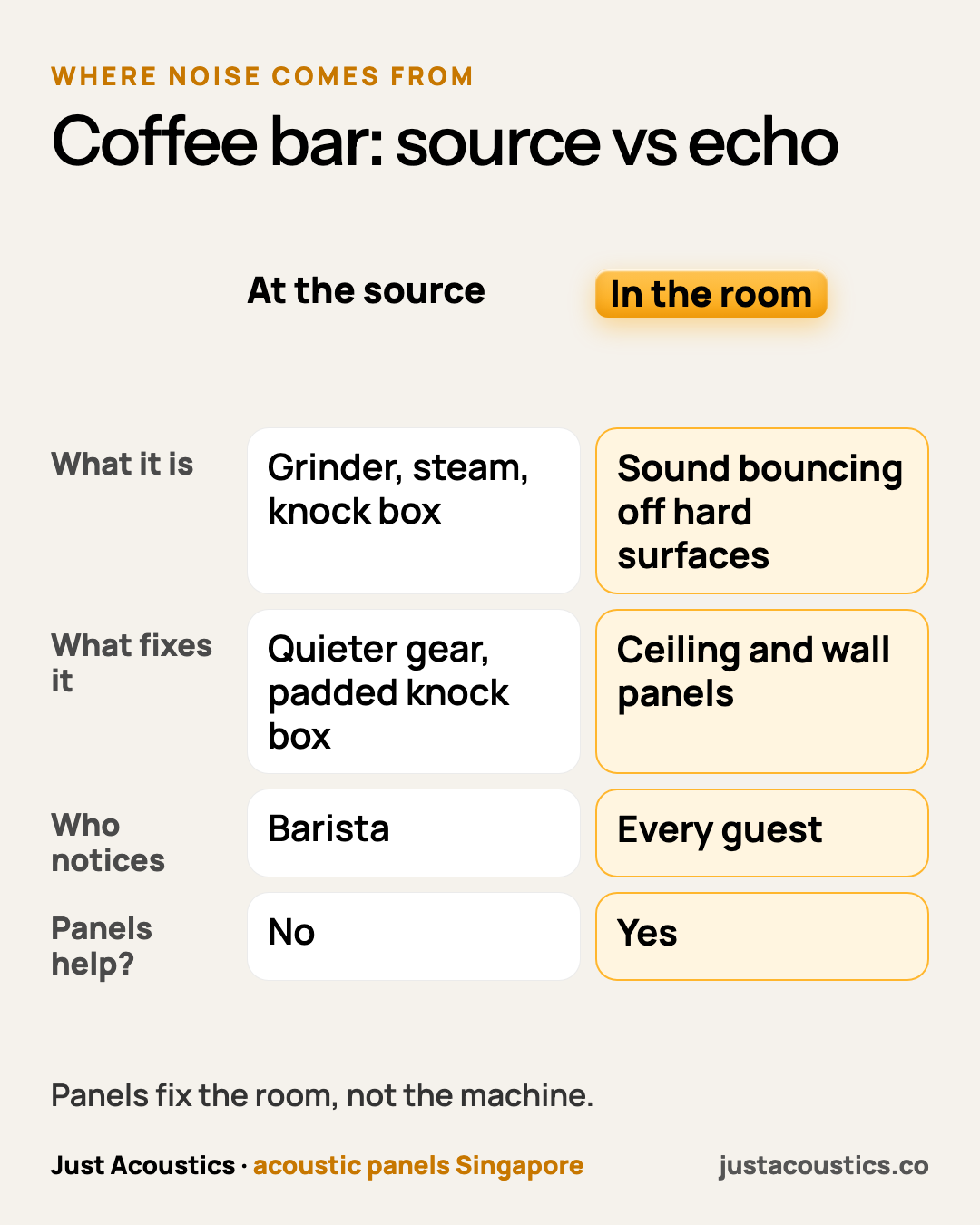
Quick answer: Grinders, steam wands and knock boxes are short, sharp sounds. In a bare café with concrete, glass and tiles, those sounds bounce around and pile up. Acoustic panels on the ceiling and the wall near the bar soak up that bounce, so each grind ends quickly instead of ringing. Panels will not make the grinder itself quieter, but the room around it will feel much calmer.
Key takeaways
- Bar noise is sharp and short, but echo stretches it out.
- Panels near and above the bar soak up the bounce.
- The grinder stays loud at the counter; the seats get calmer.
Why is my coffee bar so loud?
Most specialty cafés use hard finishes: polished concrete, tiles, glass shopfronts and bare ceilings. A grinder burst or a milk jug knock hits these surfaces and bounces back many times. Your customers hear the sound plus all its echoes. That is why the same machine sounds softer in a café with fabric, timber and soft seating.
What can panels fix and what can they not?
Panels soak up sound that bounces around the room, so the echo after each noise dies away faster. They cannot reduce the noise right at the source. A barista standing next to the grinder will still hear it clearly. For the machine itself, ask your supplier about quieter burrs, rubber feet or a knock box with a padded base. See acoustic treatment vs soundproofing.
Not sure what your room needs? Send us a photo on WhatsApp or request a free quote. We'll tell you how many panels, where they go and the price. See our restaurant acoustic panels and recent projects.
Where should panels go first?
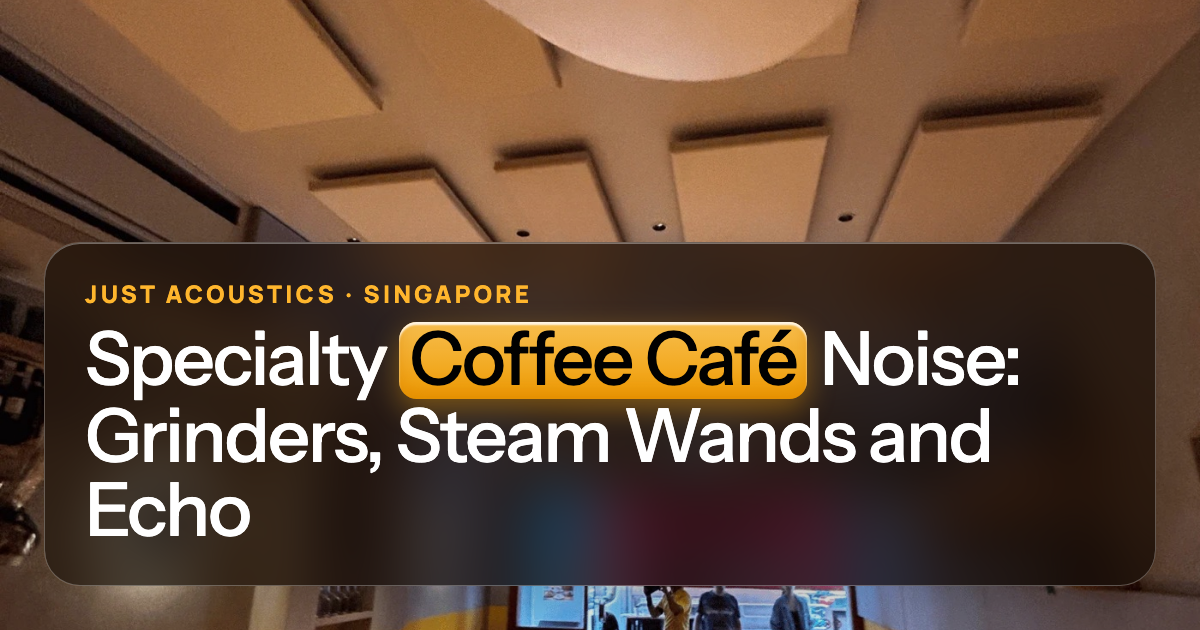
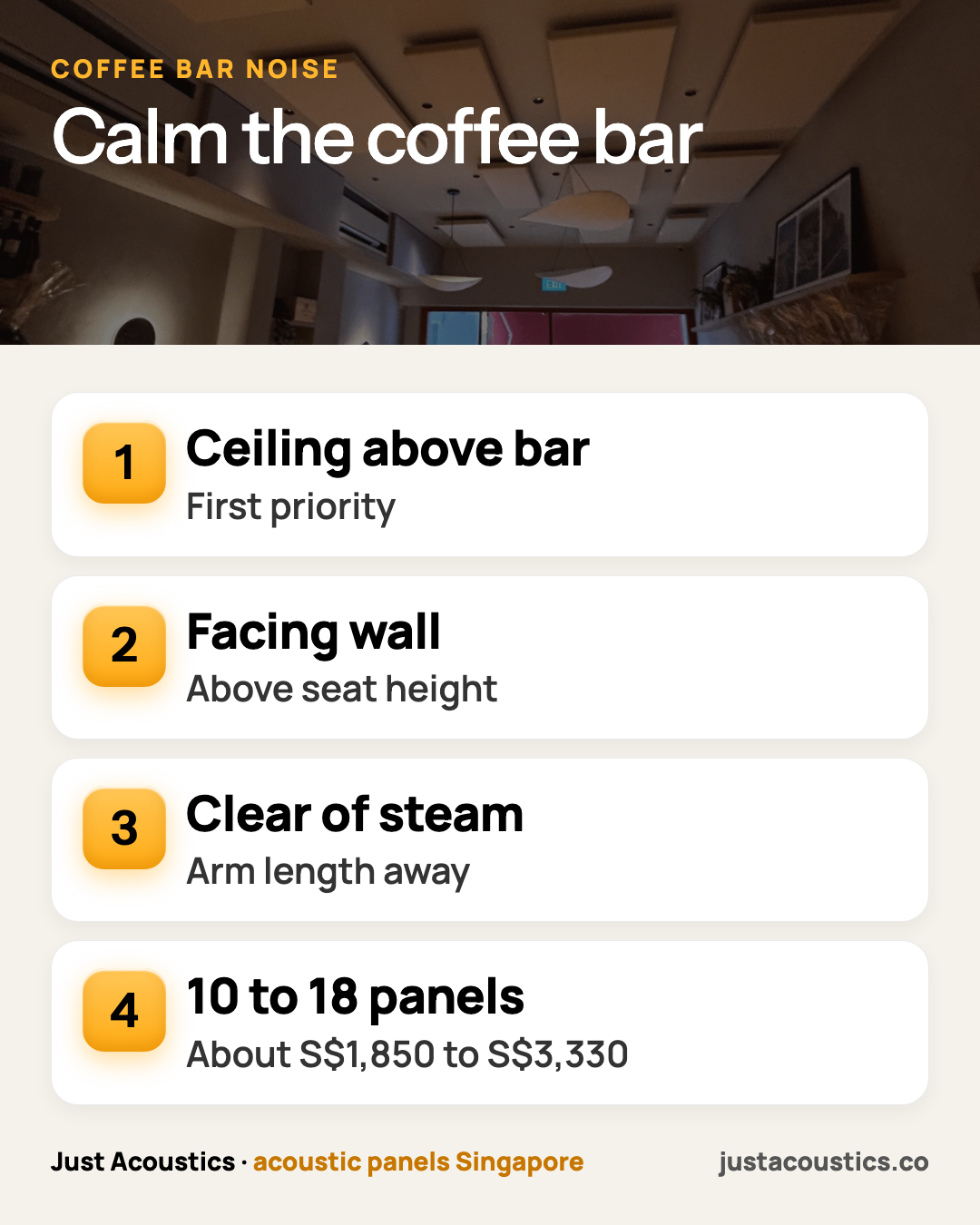
Start with the ceiling above the bar and the first seating area, because sound spreads up and out from the counter. Next, add panels on the wall facing the bar, above seat height. Avoid the wall right behind the machine where steam and splashes reach. See where to place acoustic panels first.
Keep panels away from steam and water
Fabric panels do not like steam, water or milk splashes. Keep them clear of the steam wand, the sink and the dishwasher. A gap of an arm length or more from the bar back is a good rule. Panels on the ceiling and the far walls do the most work anyway.
How many panels does a small café need?
A small 30-seat café usually needs about 10 to 18 panels. At S$185 per panel installed, that is about S$1,850 to S$3,330. High ceilings or lots of glass push you to the upper end. See restaurant acoustic panel cost.
Will it change the vibe?
A good coffee bar should still feel lively. The aim is to stop the harsh ring, not to make the café silent. Guests can talk at a normal level while still hearing the bar at work. See how panels change a restaurant atmosphere.
Music on top of the bar
If the music has to fight the bar noise, staff turn it up and everyone talks louder. Once the echo drops, the music can usually come down too. Keep speakers pointed at the seats, not at bare glass or concrete.
Matching the brand
Panels come in 39 fabric colours, so they can match a minimalist or warm café look. Printed panels can carry artwork or a logo. Panels are made to order in about 4–6 weeks. See choosing acoustic panel colours.
What we see on real jobs
The grinder is loud, but in a bare room the echo after each grind is what fills the space. Panels deal with the echo; quieter gear deals with the grinder.
Get a straight answer for your room
WhatsApp us (+65 8930 1905) a photo of your dining room, ideally taken during service, and tell us when it gets loudest. We'll come back with a ceiling-and-wall plan and a price. Ask us about installing outside opening hours.
WhatsApp us a photo · Request a free quote · See prices
Related reading