.svg?w=384)
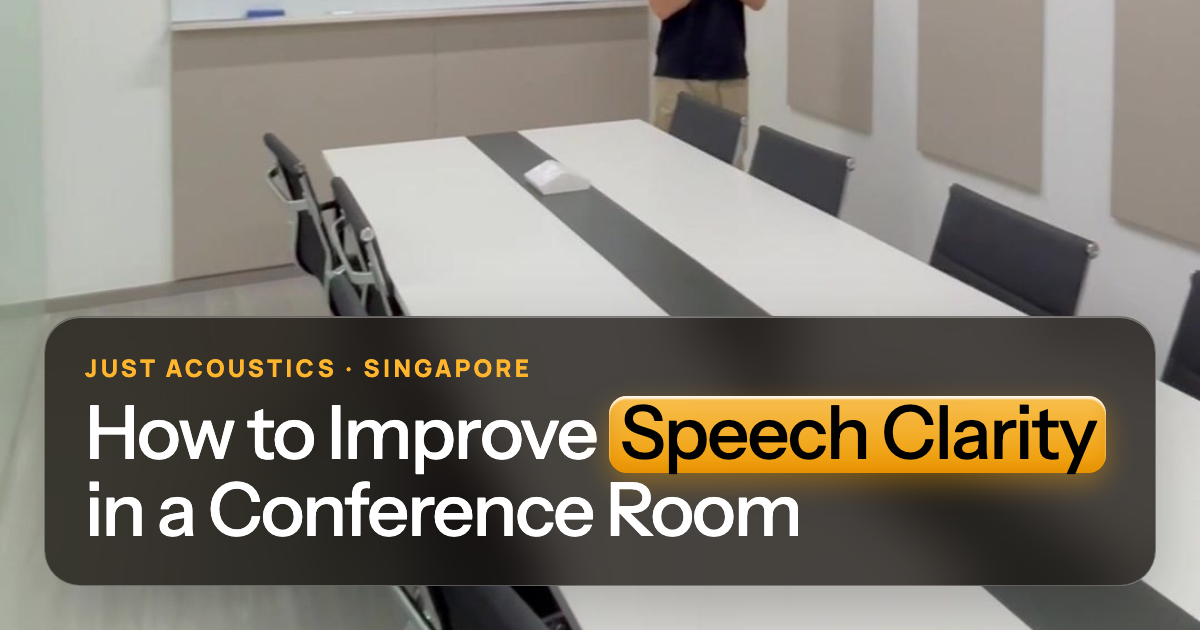
Quick answer: Speech clarity in a conference room improves when there is less echo smearing each word. Treat the walls around the table and the ceiling above it with acoustic panels, aiming for around 0.6 seconds or less of echo for speech rooms. Then position microphones close to people and speakers away from hard reflective corners.
Key takeaways
- Clarity = less echo, not more volume.
- Treat walls around the table and the ceiling above it.
- Fix the room first, then tune the audio system.
Why do words blur in conference rooms?
Each word bounces off hard surfaces and arrives again a fraction later, overlapping the next word. Consonants (the sounds that carry meaning) get lost first. The measure is echo time; for speech rooms, around 0.6 seconds or less works well. See what is RT60?.
What's the checklist for clearer speech?
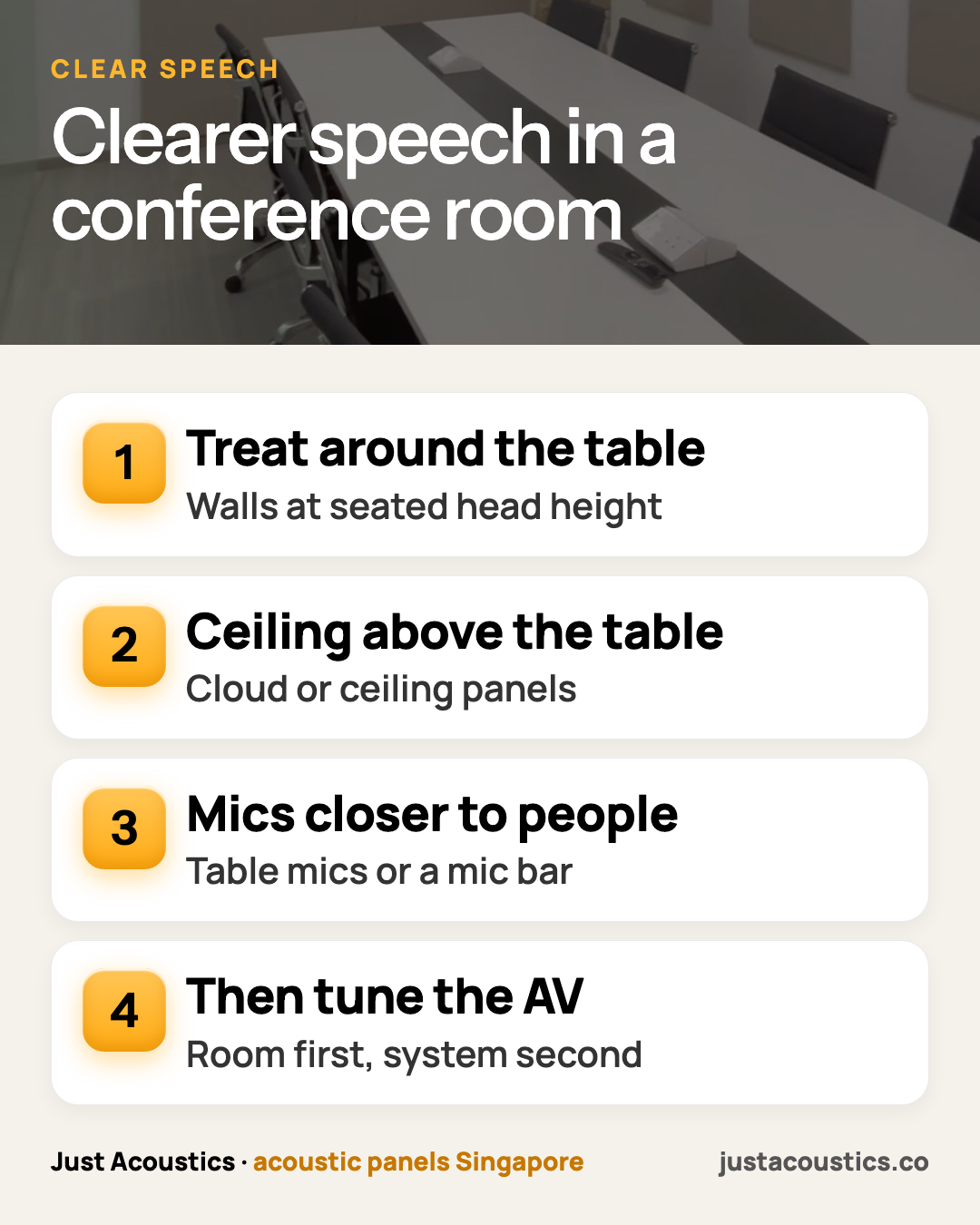
- Treat the walls beside and opposite the table at seated head height.
- Add ceiling panels or a cloud above the table.
- Break up any pair of bare facing walls.
- Put microphones closer to people (table mics or a mic bar aimed at seats).
- Keep loudspeakers out of corners, which boost boomy pitches.
- Turn the system down once the room is treated.
Not sure what your room needs? Send us a photo on WhatsApp or request a free quote. We'll tell you how many panels, where they go and the price. See our office acoustic panels and recent projects.
Should we upgrade the AV system?
Fix the room first. Expensive microphones and DSP can't remove echoes that happen in the room; they just capture them. After treatment, the same AV system usually sounds noticeably better.
How much treatment does a conference room need?
Usually 20–40% of hard surfaces; boardrooms of 30–50 m² often need 14–24 panels. At S$185 per panel installed, that is about S$2,590–S$4,440. The exact count is confirmed from photos. See panels for meeting rooms.
What we see on real jobs
A new conference system in an echoey room still captures the echo. Microphones and processing can't remove echoes that happen in the room. Treat the walls and ceiling first, then judge the system.
Get a straight answer for your room
Send a photo of the meeting room or floor on WhatsApp (+65 8930 1905), with the rough size. We'll tell you how many panels, where they go and the price, and we can prepare documents for your building management.
WhatsApp us a photo · Request a free quote · See prices
Related reading