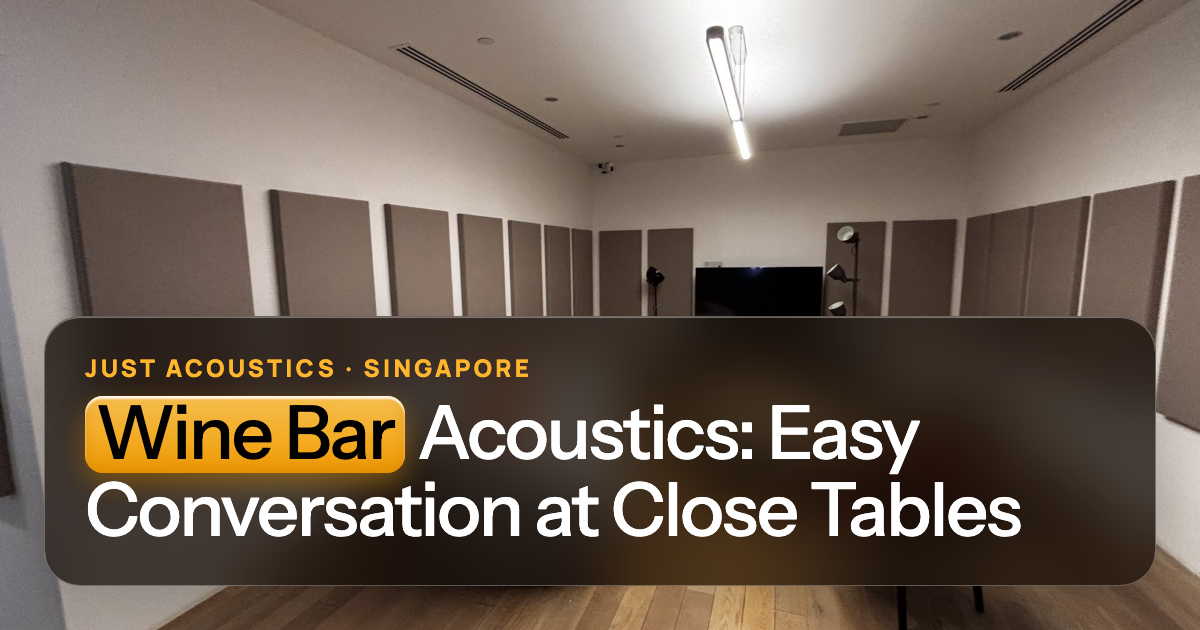
Quick answer: Guests go to a wine bar to talk, taste and relax. If the room echoes, close tables hear each other and everyone raises their voice. Panels on the ceiling and upper walls soak up that echo so conversation stays easy. Dark fabrics suit moody wine bars and can almost disappear into the decor.
Key takeaways
- Wine bars sell easy conversation.
- Panels keep close tables from blending together.
- Dark or warm fabrics blend into moody interiors.
Why does sound matter so much in a wine bar?
People come for long, relaxed talks over a bottle. If they have to lean in and repeat themselves, they leave sooner and enjoy it less. A calm room also makes staff explanations of wines easier to hear. Sound is part of the product.
What makes wine bars echoey?
Many use exposed brick, concrete, glass wine walls and timber floors. These look great but reflect sound. Small shophouse units with high ceilings add to the problem. See why high-ceiling cafés are echoey.
Not sure what your room needs? Send us a photo on WhatsApp or request a free quote. We'll tell you how many panels, where they go and the price. See our restaurant acoustic panels and recent projects.
Where should panels go?
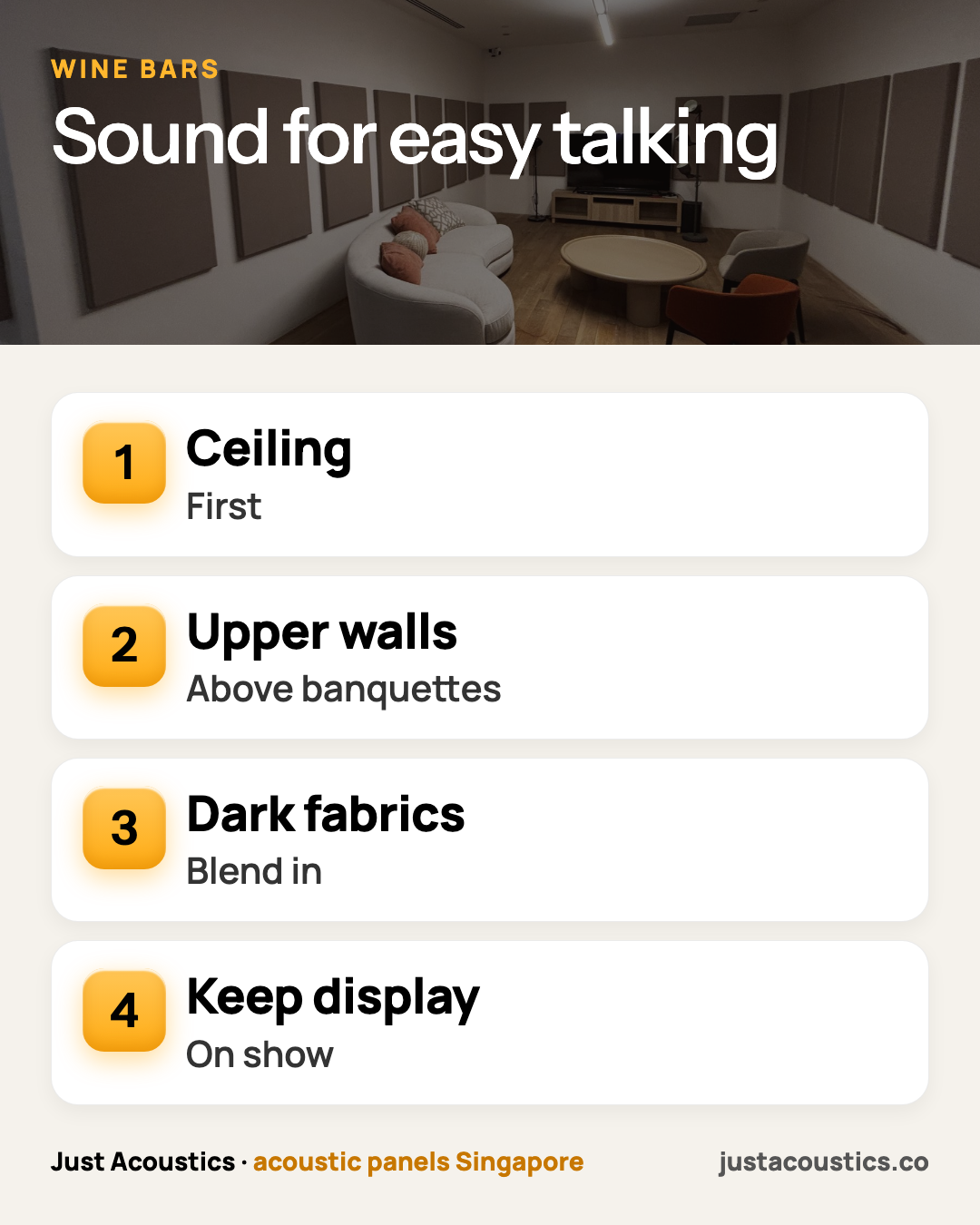
The ceiling is first, especially over the main table area. Next, upper walls above the banquettes or bar stools. Avoid covering the wine display, since it is a key feature. Behind booths and banquettes, panels at head height also stop voices bouncing between tables.
Which colours suit a wine bar?
Charcoal, deep green, burgundy and warm browns blend into dim, moody rooms. Dark panels on a dark ceiling almost vanish. Panels come in 39 fabric colours. See choosing acoustic panel colours.
How does this differ from a cocktail bar?
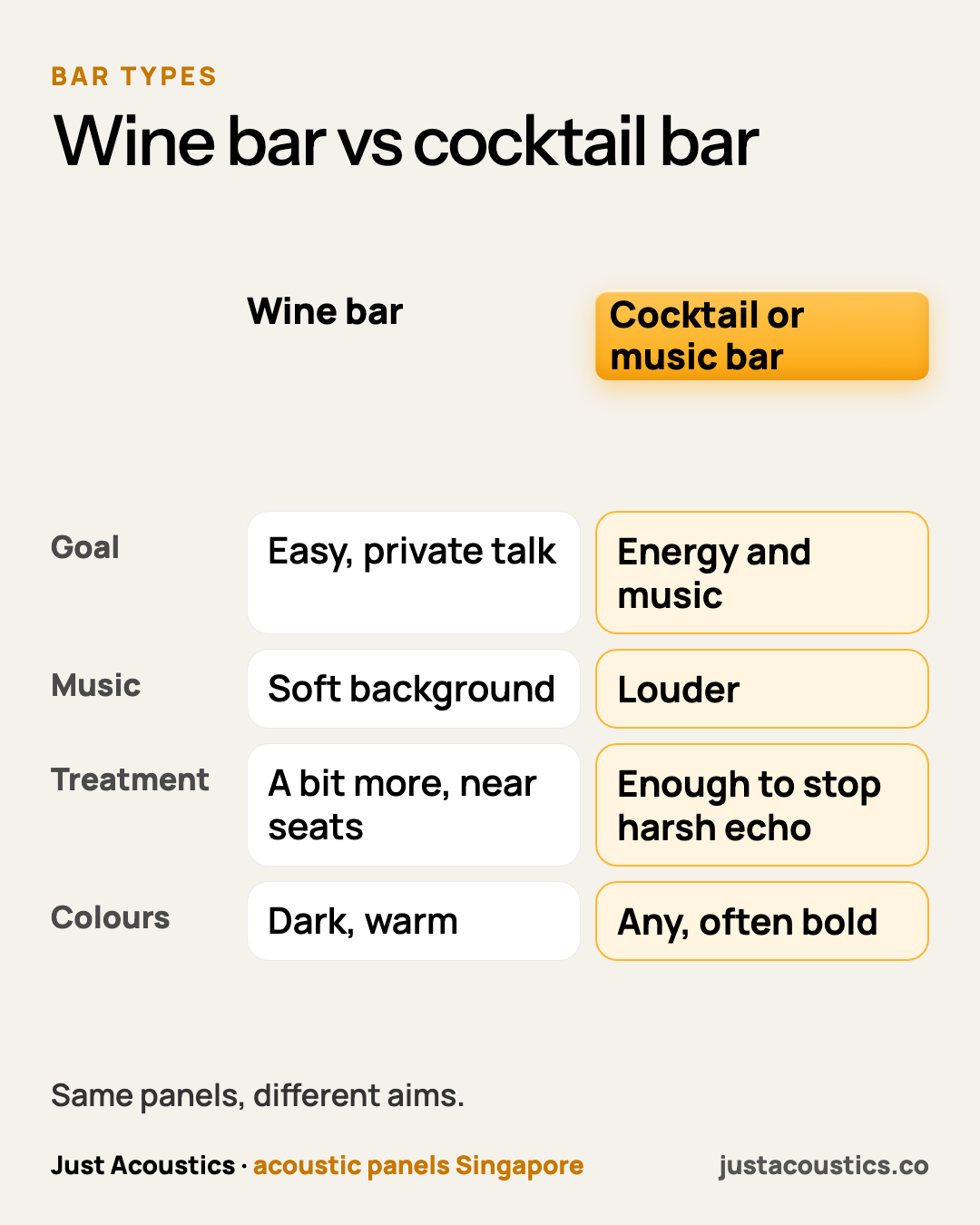
Cocktail and music bars often want energy and louder music. A wine bar usually wants a softer, more intimate sound. That often means a bit more treatment, focused near the seating. For livelier bars, see what fixes a loud restaurant.
What does it cost?
A small bar similar to a 30-seat café usually needs about 10 to 18 panels, about S$1,850 to S$3,330 installed. Larger rooms around 10 × 6 m need 28 to 38 panels, about S$5,180 to S$7,030. Most bars can be installed in a day, before opening. See restaurant acoustic panel cost.
Tasting events
If you host tastings with a speaker, a treated room makes their voice easier to follow. Panels on the wall facing the speaker help most. For larger groups, a small mic may still be useful.
Neighbours upstairs
No. Panels will not stop music or voices reaching upstairs flats. That needs building work, such as a sealed ceiling or isolation, done by a builder. See acoustic treatment vs soundproofing.
What we see on real jobs
Panels do not have to look like an office. Dark fabrics in a dim room can look like part of the design.
Get a straight answer for your room
WhatsApp us (+65 8930 1905) a photo of your dining room, ideally taken during service, and tell us when it gets loudest. We'll come back with a ceiling-and-wall plan and a price. Ask us about installing outside opening hours.
WhatsApp us a photo · Request a free quote · See prices
Related reading
- Acoustic treatment for restaurants
- Choosing acoustic panel colours
- Restaurant acoustic panel cost
- Can panels help with neighbour noise?
- Restaurant acoustic panels
- Prices and installation
- Our projects
- Flexi™ acoustic panels (39 colours)
- Get a free quote
- Korean BBQ and Hotpot Restaurants: Noise, Smoke and Where Panels Can Go